
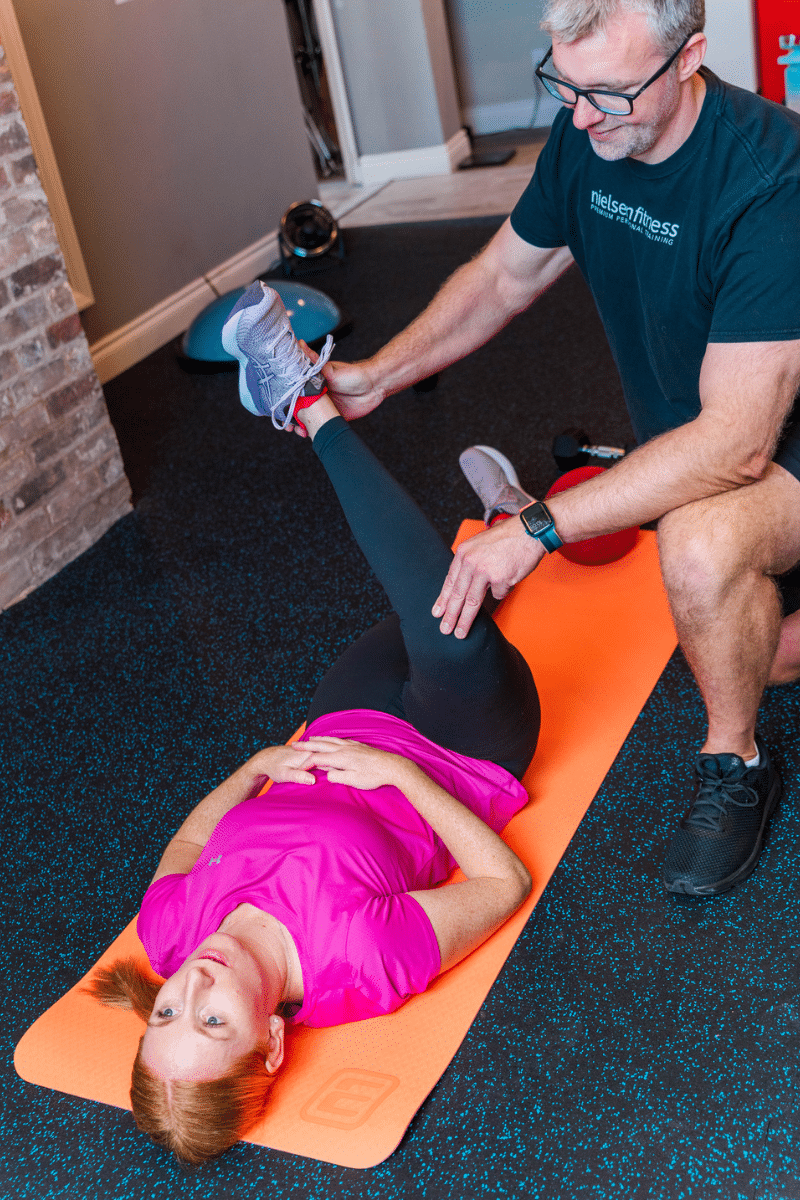
Functional Strength Older Adult Exercises Trainer Stretching
October 20th, 2025
How to Improve Hip Mobility and Why It Matters
Hip mobility — or lack of it — has a strong impact on movement, strength, and overall well-being. Whether you’re training in a gym, working with a virtual personal trainer, or exercising with one of our in-home personal trainers in Toronto, Collingwood, London, Hamilton, or Ottawa, hip mobility should be a part of your fitness routine. Read on to learn why hip mobility is important and what you can do to keep your hips healthy, strong, and mobile.
THE BASICS OF HIP MOBILITY
The hips are ball-and-socket joints designed to move in multiple directions. They’re central to how you walk, run, squat, and bend. When hip mobility is limited, the body compensates by overusing other areas like the lower back or the knees. “Maintaining good hip mobility allows for efficient movement patterns, reduces the risk of imbalances and injuries, supports proper alignment, facilitates daily activities, aids in injury rehabilitation, and promotes overall comfort and ease of movement” (NASM).
Sitting for long hours can shorten and tighten your hip flexors. “When you’re sitting, whether you’re at your desk for the whole morning, on a long road trip in a car, or stuck on a ten-hour flight to Europe, your hip flexors, the muscles that help bring your thigh to your chest, wind up trapped in a shortened position, unable to stretch out. Your glutes, meanwhile, are in an ultra-relaxed, stretched position.
When you stand, you’re often left with a nagging tightness in the front of your hips” (Men’s Health, 2025). This stiffness can reduce your range of motion, making simple movements — like climbing stairs or bending to pick something up — feel more difficult than they should. As in-home and virtual personal trainers, we often remind clients that the hips are foundational for movement. If your foundation is weak or restricted, everything built on top of it — like strength, balance, and endurance — becomes less stable.
POSTURE
Poor posture is one of the most common issues we see, especially among clients with office jobs. “Maintaining healthy posture can reduce wear and tear on your joints” (Cleveland Clinic, 2023), particularly the shortening of the hip flexors. Conversely, slouched shoulders, rounded spines, and forward head positions often start with what’s happening in the hips.
When hip flexors are tight, they pull the pelvis forward, creating an exaggerated arch in the lower back. This tilt throws the spine out of alignment, forcing the upper body to compensate. Over time, this imbalance can lead to chronic back pain and reduced core strength. Improving hip mobility is one of the most effective ways to correct posture naturally. With looser, stronger hips, the pelvis can sit in a more neutral position, which supports better spinal alignment.
ATHLETICS
For athletes and fitness enthusiasts, hip mobility can impact performance. Consider a sprinter exploding off the starting line, a weightlifter sinking into a deep squat, or a hockey player pivoting on the ice. In each of these examples, hip mobility is crucial. Restricted hips limit stride length, squat depth, and agility. They also increase the likelihood of compensations, which can reduce power output and lead to injury. By prioritizing hip mobility, athletes can improve speed, strength, and stability while also protecting their joints.
INJURIES
We often see clients who struggle with recurring injuries that trace back to poor hip mobility. For example, knee pain is commonly linked to stiff hips. When the hips can’t rotate properly, the knees end up absorbing stress they weren’t built to handle. Similarly, lower back pain often comes from hips that can’t fully extend or flex. This causes breakdown over time.
FUNCTION
For older adults, hip mobility impacts independence. Restricted hips can make walking or getting up more challenging, increasing the risk of falls. On the flip side, maintaining hip mobility supports balance, stability, and confidence in movement as we age. We often remind our clients that mobility is directly linked to quality of life.
MIND-BODY CONNECTION
One aspect of hip mobility that often surprises clients is its connection to stress and emotional health. The hips are sometimes referred to as a storage area for tension, as many people experience tightness here during stressful times. This is why mobility work in the hips can feel like a release mentally and emotionally. Clients often describe feeling lighter or more relaxed after hip-focused sessions.
OUR TIPS
Dynamic stretches, mobility drills, and strength training can all help restore range of motion in the hips: movements like hip circles, lunges with a twist, and deep bodyweight squats. Strengthening the muscles around the hips — especially the glutes — also plays a key role. Strong glutes support hip stability, which allows for smoother, safer movement. That’s why we often incorporate exercises like bridges and clamshells into client programs.
FINAL THOUGHTS
Hip mobility isn’t flashy, but it’s extremely important. Regularly incorporating hip mobility drills into your routine will improve your posture, reduce injuries, boost performance, and enhance daily life. To get an idea of where to begin with your own hip mobility training, check out our reel from Coach Liz! Remember that the small steps you take every day have a lasting impact on your long-term health, and the team at Nielsen Fitness is here to help. Contact us today!