
Functional Strength Workout Structure
June 24th, 2026
The Best Home Workout: Machines or Free Weights
When it comes to building strength and supporting long-term health, one question consistently comes up in our coaching sessions: should you use strength machines or free weights for the best home workout? At Nielsen Fitness, we’ve worked with everyone from complete beginners to competitive athletes, and we’ve seen firsthand how both training modalities can deliver impressive results. The truth is that neither option is inherently superior in every situation. Instead, each has unique advantages and limitations that can influence your progress, safety, and long-term success.
If your goal is to create the best home workout or maximize your training, understanding the differences between machines and free weights can help you make informed decisions that align with your fitness goals.
UNDERSTANDING STRENGTH MACHINES
Strength machines guide your movement through a predetermined path using cables, pulleys, levers, or weight stacks. Some examples include leg press machines, chest press machines, seated row machines, and cable systems. These machines are designed to target specific muscle groups while minimizing the need for balance and stabilization.
One of the biggest advantages of machines is their accessibility. Machines provide a simple introduction to resistance training because they offer user-friendly supports (like adjustable seats and back rests) and allow users to focus on learning how to generate force without worrying about coordination. This can help build confidence and reduce the intimidation many people feel when starting a strength program. It’s often the best home workout for beginners or those with balance issues.
Machines can also be highly effective for isolating muscles. If you’re recovering from an injury, rehabilitating a specific area, or trying to strengthen a particular muscle group, machines can provide the best home workout through controlled resistance while limiting unnecessary movement. This makes it easier to train close to muscular fatigue without compromising technique.
UNDERSTANDING FREE WEIGHTS
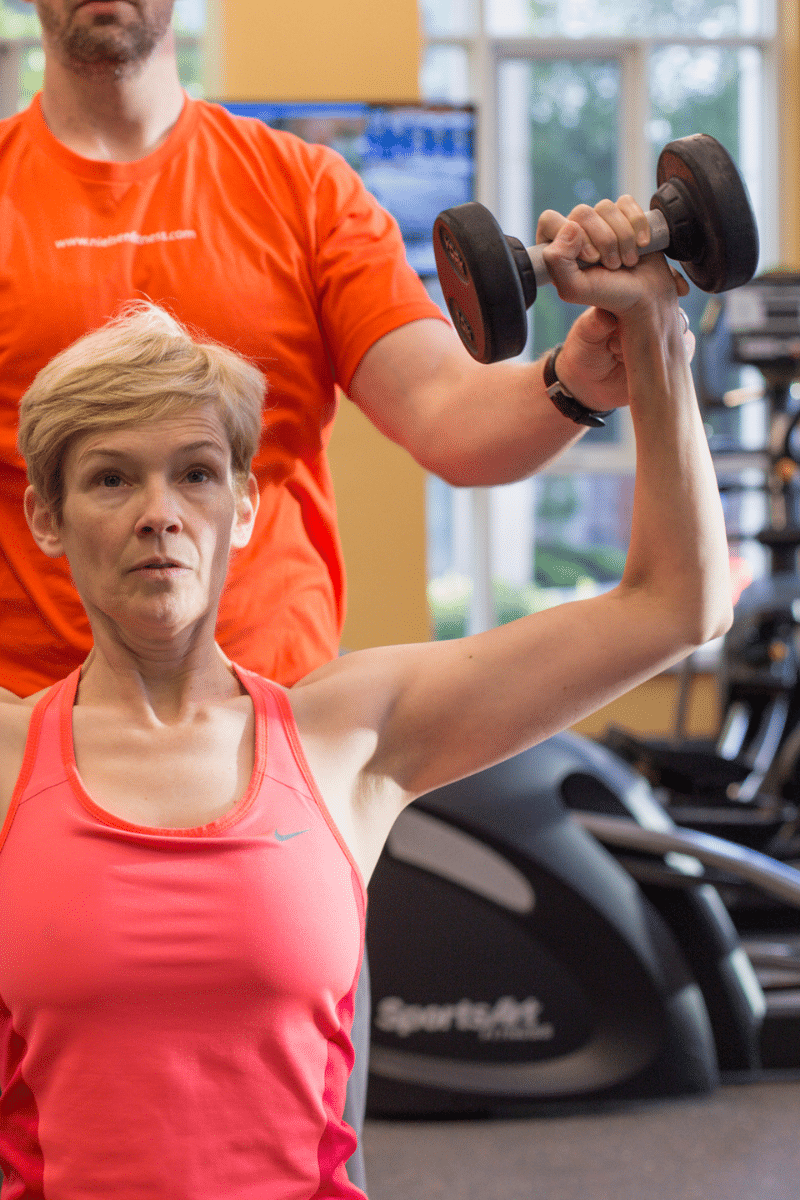
Free weights include dumbbells, barbells, kettlebells, and other resistance tools that are not attached to a machine. Unlike machines, free weights require the user to control the movement path and stabilize the load throughout the exercise. This added demand is one reason free weights are often considered the best home workout for functional strength development. Exercises like squats, deadlifts, lunges, presses, and rows require multiple muscle groups to work together.
In addition to strengthening primary movers, free-weight exercises challenge stabilizing muscles, coordination, balance, and body awareness. For many people seeking the best home workout, free weights are also practical. A small collection of dumbbells or adjustable weights can provide dozens of exercise options without requiring the space or expense associated with large gym machines. Free weight also allow movement in multiple planes, which can better mimic the demands of daily life.
WHICH IS BETTER FOR FUNCTIONAL STRENGTH?
When the goal is maximizing functional strength, free weights generally have the edge. Compound exercises performed with barbells and dumbbells allow you to train multiple muscle groups simultaneously while developing coordination between those muscles. This type of training often produces greater carryover to real-world activities and athletic performance.
For example, a barbell squat requires the legs, core, hips, and upper body to work together to control the load. A machine leg press, while effective for building leg strength, removes much of the stabilization requirement. As a result, the squat often develops more comprehensive strength qualities.
That said, machines can still be highly effective for increasing muscular strength. In some cases, they may even allow individuals to safely handle greater loads because balance and stabilization are less limiting factors. Many advanced lifters use machines strategically to add training volume and target specific weaknesses.
WHICH IS BETTER FOR LONGEVITY?
Longevity is about more than lifting heavier weights. It involves maintaining muscle mass, preserving mobility, reducing injury risk, supporting bone health, and staying physically capable throughout life. “Experts estimate that about 25% of the variation in human life span is determined by genetics. But the rest can be attributed in large part to how we take care of our bodies” (Harvard Health, 2024).
Free weights offer several benefits that support longevity. Because they challenge balance, coordination, and stability, they help maintain movement skills that become increasingly important as we age. Research consistently shows that strength training can improve bone density and reduce the risk of falls, particularly when exercises involve weight-bearing movements.
However, machines also play an important role in longevity-focused training. They provide a safe way to continue resistance training even when mobility limitations, joint pain, or previous injuries make certain free-weight exercises difficult. Machines can help older adults maintain muscle mass and strength with lower technical demands.
For long-term health, the best home workout is often one that combines resistance training with consistent movement, mobility work, cardiovascular exercise, and adequate recovery. Whether that resistance comes from machines or free weights is less important than maintaining the habit over decades.
COMPARING SAFETY CONSIDERATIONS
Safety is often a major concern when choosing between machines and free weights. Neither method is automatically safer than the other; proper use matters far more than the equipment itself.
Machines are generally easier to learn because the movement path is guided. This reduces the likelihood of technical errors and can make training feel more predictable. For beginners or those returning from injury, machines may provide a comfortable entry point into strength training.
Free weights require more skill and attention to technique. Poor form, excessive loading, or attempting exercises beyond your current ability can increase injury risk. However, when taught properly and progressed appropriately, free-weight training is extremely safe and can build resilient movement patterns.
One misconception we frequently encounter is that free weights are dangerous while machines are safe. In reality, both can be problematic if used incorrectly. Excessive weight, poor setup, or ignoring pain signals can lead to injury regardless of the equipment being used. The safest training program and the best home workout is one that matches your current ability level and allows you to maintain proper technique throughout every repetition.
PROGRESSION: THE KEY TO LONG-TERM RESULTS
Regardless of whether you choose machines or free weights, progression is what drives results. Progressive overload refers to gradually increasing the challenge placed on your muscles over time.
With machines, progression is often straightforward. You can increase the weight stack, add repetitions, slow the tempo, or increase training volume. Because the movement is controlled, tracking progress tends to be simple and consistent. Free weights offer similar progression opportunities while also allowing you to improve movement quality, coordination, and stability. You might increase the weight lifted, perform additional repetitions, improve your range of motion, or execute more advanced exercise variations.
For those building the best home workout, progression is especially important. Many people assume they need a fully equipped gym to get stronger, but consistent improvements in resistance, exercise selection, and training quality can produce significant results with minimal equipment. The most successful trainees focus less on finding the perfect exercise and more on making steady, sustainable improvements over time. That said, “older adults, especially those with heart issues and other conditions like osteopenia or osteoporosis, have a higher risk of injury and should work with a physical therapist or athletic trainer before trying progressive overload” (Cleveland Clinic, 2025).
THE VERDICT: MACHINES AND FREE WEIGHTS BOTH HAVE VALUE
The debate between strength machines and free weights often creates the impression that one must be better than the other. In reality, both are valuable tools that can help you build strength, improve fitness, and support long-term health.
Free weights tend to offer greater benefits for functional strength, coordination, and movement quality. Machines provide accessibility, control, and targeted muscle development. For many of our clients, the best home workout involves combining both methods to capture the strengths of each approach.
As personal trainers, we know that the most effective training plans are tailored to individual goals, experience level, injury history, and available equipment. Whether you’re training in a commercial gym or creating the best home workout with a personal trainer consistency and intelligent progression matter more than the specific tools you choose. The best tool is the one that safely helps you progress consistently.