
Core Strength Exercise Fitness
July 30th, 2025
Core work hurting your neck? Here’s why and how to fix it
Core exercises are a staple in every Nielsen Fitness program, and for good reason. “Core exercises train the muscles in your core to work in harmony. This leads to better balance and steadiness, also called stability. Stability is important whether you’re on the playing field or doing regular activities. In fact, most sports and other physical activities depend on stable core muscles” (Mayo Clinic, 2025).
A strong core also supports your posture, protects your back, and helps prevent injury. That said, some of our in-home and virtual personal training clients find that certain core exercises leave them with an uncomfortable side effect: neck pain. If you’ve ever been in the middle of a set of crunches or toe-touches and felt more strain in your neck than in your abs, you’re not alone. Let’s break down why it happens, and more importantly, how to stop it.
WHY NECK PAIN HAPPENS
When you’re doing exercises that target the abdominals — especially floor movements like crunches, sit-ups, or leg lifts — it’s common to inadvertently rely on the muscles in the neck to help lift the upper body. Instead of isolating the core, your neck may start to take over the movement, especially if your abs aren’t fully engaged or if you’re using poor form. Over time, this repeated strain can lead to muscle tightness, fatigue, or even minor injury.
Neck pain can also happen because of how you’re positioning your head and shoulders. If your head is jutting forward, or if you’re yanking on your neck with your hands behind your head, you’re more likely to create unnecessary tension. Weak upper back and shoulder muscles can also contribute to poor posture during these movements, which puts even more pressure on the neck.
PROPER FORM
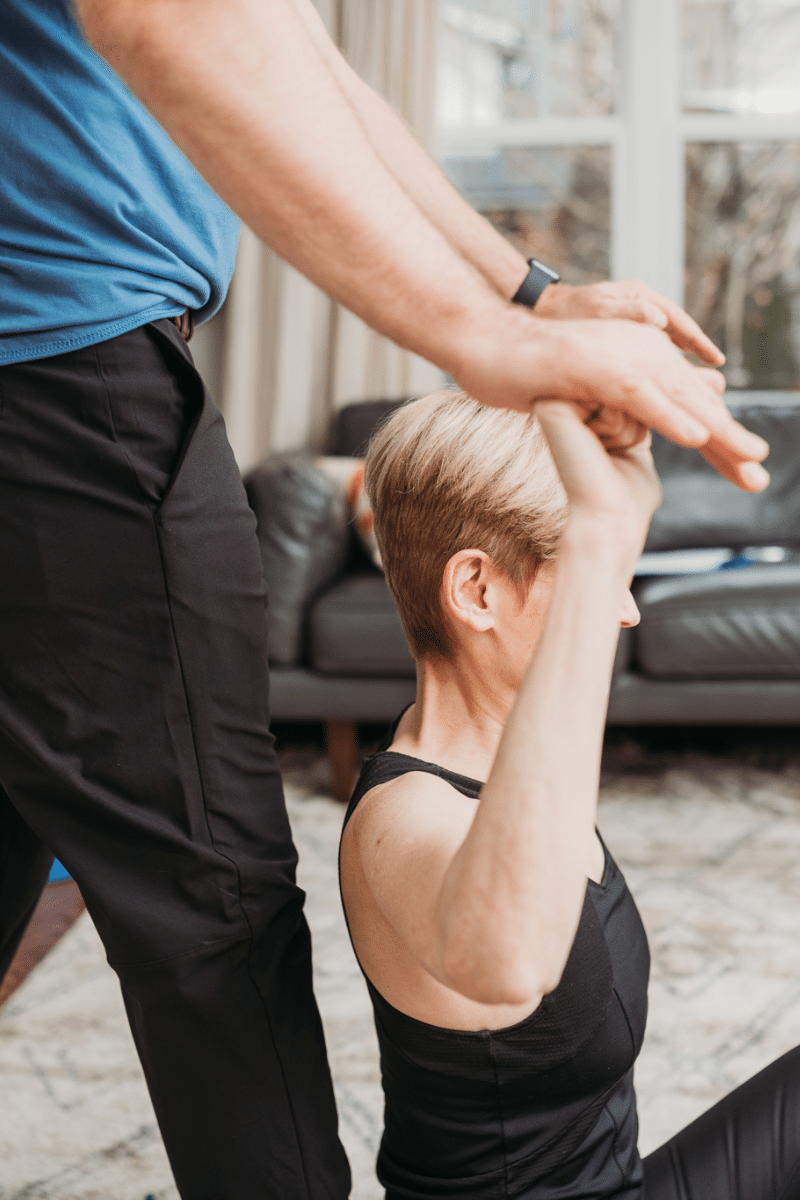
Good form is everything, including when it comes to core exercises. Often, neck pain is a signal that your body is compensating for weak core muscles by recruiting surrounding muscles (like those in your neck and shoulders) to do the job. An in-home or virtual personal trainer can help you learn how to activate your core properly by guiding you through physical cues and visual feedback.
When your core is correctly engaged, your body becomes more efficient, and your neck muscles won’t have to overcompensate. It’s also important to understand that feeling the “burn” in your abs doesn’t require fast reps or big movements. Slow, controlled movements with proper technique are far more effective, not to mention safer. Sometimes, dialing back the intensity or focusing on the quality of each repetition can make a huge difference in both your results and how your body feels afterward.
OUR TIPS
There are several techniques to prevent neck strain while strengthening your core. First, focus on keeping your chin slightly tucked, as if you’re holding a tennis ball under your chin. “Keeping your chin tucked results in less activation of the sternocleidomastoid muscle, which runs along the front and sides of the neck” (Livestrong, 2023). This reduces tension. Try to keep your elbows wide if your hands are behind your head, and avoid pulling your head forward.
It’s also helpful to incorporate exercises that eliminate the need to lift your upper body off the ground entirely, like planks, dead-bugs, or bird-dogs. These movements are easier on the neck while still being extremely effective for developing core strength. If you’re unsure of which exercises are safest for you, our in-home personal trainers in Toronto, Collingwood, London, Hamilton, and Ottawa (or a virtual personal trainer anywhere) provide personalized feedback and modifications suited to your fitness level and goals.
Another good strategy is to take advantage of reciprocal inhibition: a neuromuscular process where muscles on one side of a joint relax to allow the opposing muscles (antagonists) to contract. If you gently push the back of your head into your hands during a movement that requires elevated shoulders, the back of your neck will hold a gentle tension that can aid in relaxing the front of the neck (where most of our clients feel tension).
PERSONAL TRAINING
If neck pain persists even after making adjustments to your form and exercise selection, it’s worth consulting a professional. An in-home or virtual personal trainer can observe your movements, help you troubleshoot what’s going wrong, and guide you toward safer, more effective techniques. Nielsen fitness trainers offer immediate corrections and tailored advice to optimize your training routine as much as possible.
FINAL WORDS
Your core workouts should be challenging, but not painful. Neck discomfort during core exercises is common but not something you have to live with. Paying attention to your form, choosing the right exercises, and getting guidance from a qualified in-home or virtual personal trainer can strengthen your abs without sacrificing comfort. Book your free initial session with our team, here!