
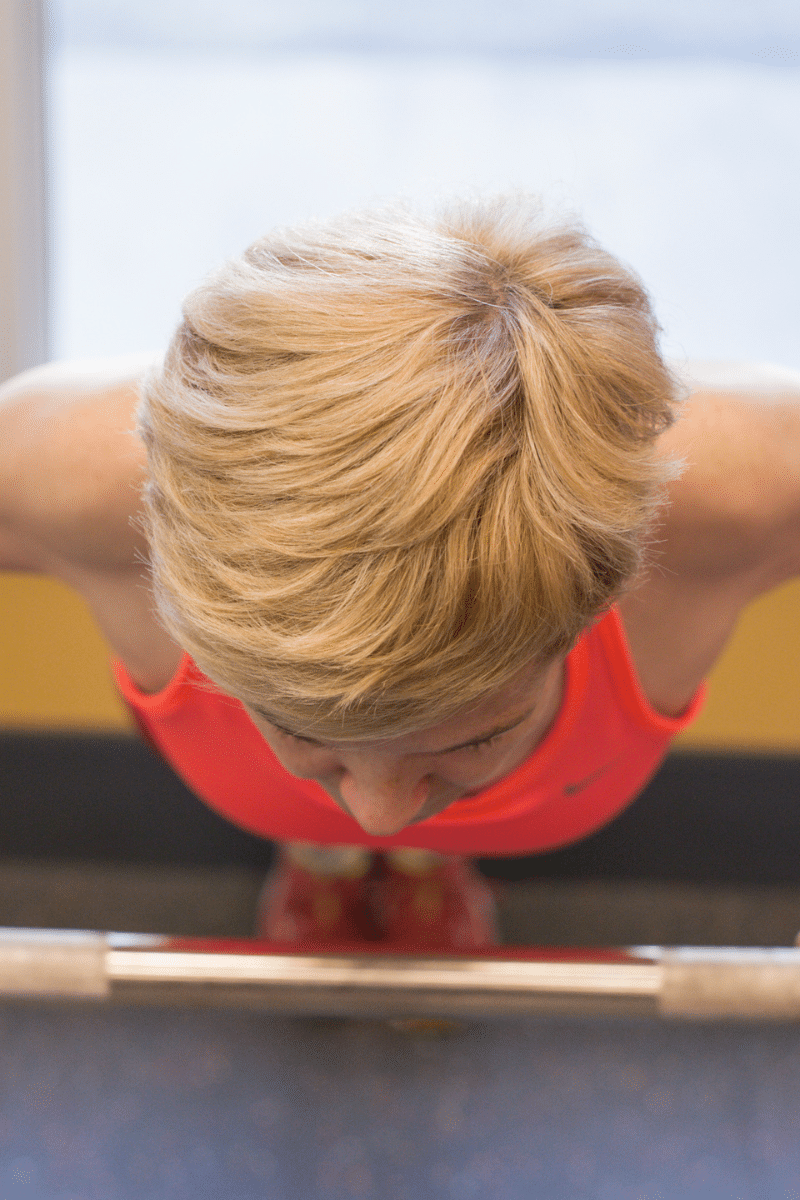
Social media fitness trends come and go, but every once in a while a trend sparks a genuinely useful conversation about anatomy, biomechanics, and exercise technique. One of the latest topics gaining attention online is the “female anatomy push-up,” a push-up variation where the fingertips are rotated outward instead of pointing straight ahead.
As a team of in-home and virtual personal trainers, we’ve had many female clients ask why this variation may feel more natural and whether there’s actual science behind it. The answer is mainly yes; body structure and joint alignment can absolutely influence how exercises feel and perform.
Whether you’re creating a home workout plan, participating in virtual personal training, or searching for in-home personal training near your area, understanding these biomechanics can help you exercise more effectively and comfortably. Read on to learn our professional advice.
WHY PUSH-UPS ARE SO CHALLENGING
First of all, push-ups are one of the most misunderstood bodyweight exercises in fitness. They look simple, but they actually require significant strength, coordination, and stability. A proper push-up demands engagement from the chest, shoulders, triceps, core, back, and hips at the same time.
It’s important to remember that a good base of strength is required to perform push-ups at all. One small shift of the hands won’t change your strength levels. Most beginners struggle with the movement because it combines upper-body strength with total-body control. The body must remain stable while the chest and arms manage a large percentage of body weight against gravity.
Push-ups can feel especially difficult for many women because women typically have less upper-body muscle mass compared to men. “Inherent differences in testosterone levels between sexes are known to be responsible for larger baseline muscle size in males compared to females on average” (National Library of Medicine, 2023). Anatomy and joint alignment also influence movement mechanics, which is where the female anatomy push-up comes into play.
UNDERSTANDING THE FEMALE CARRYING ANGLE
Women generally tend to have wider hips than men, which influences the natural alignment of the arms. This contributes to a slightly greater carrying angle, also known as the Q-angle relationship between the shoulders, elbows, and hips.
“Carrying angle is the angle formed at the elbow joint when fully extended and supinated, between the long axes of the arm and forearm,” or the natural outward angle of your forearm when your arm hangs straight down with palms facing forward. “The normal carrying angle is 5°-10° in males and 10°-15° in females” (National Library of Medicine, 2025). Because women often have wider pelvises, the arms naturally track slightly differently during pressing and pulling movements.
In practical terms, this means that a perfectly straight-forward hand position during push-ups may not always feel anatomically ideal for some women. Forcing the wrists and elbows into a completely forward-facing alignment can create unnecessary stress or awkward movement mechanics.
WHAT IS THE FEMALE ANATOMY PUSH-UP?
The female anatomy push-up modifies traditional hand placement by rotating the hands outward approximately 15 to 30 degrees. Instead of pointing the fingertips directly forward, the hands angle slightly away from the body. This subtle change allows the shoulders, elbows, and wrists to align more naturally with the body’s structure during the movement.
To perform the exercise, begin in a standard push-up position with the hands slightly wider than shoulder-width apart. Rotate the fingertips outward roughly 15 to 30 degrees so the hands sit at a slight diagonal angle. Engage the core, maintain a neutral spine, and lower the chest toward the floor while allowing the elbows to bend naturally. The goal is not exaggerated hand rotation. The adjustment should feel comfortable and natural rather than forced. For many women, this positioning creates smoother elbow tracking and reduces strain through the wrists and shoulders.
WHY THE ADJUSTMENT MAY HELP
When the hands remain perfectly straight during push-ups, some women may feel tension in the wrists, shoulders, or elbows because the movement path does not fully align with their natural carrying angle. Rotating the hands slightly outward often creates a more efficient pressing position.
In many cases, clients immediately notice that the movement feels smoother and more stable after making this small adjustment. As trainers, we constantly remind clients that good exercise form is not about forcing every body into identical positions. Effective movement should work with your anatomy rather than against it.
PROPER PUSH-UP FORM STILL MATTERS
Although the outward hand angle may improve comfort, proper push-up mechanics remain essential. Hand positioning alone will not fix poor technique.
A strong push-up begins with full-body tension. The core should remain engaged throughout the movement, and the body should stay aligned from head to heels. The hips should neither sag nor rise excessively. The elbows should bend naturally rather than flaring aggressively outward, and the chest lowers under control before pressing back upward in one smooth motion.
Another important point is that the 15-to-30-degree hand angle is a guideline, not an exact rule. Some individuals may prefer a smaller adjustment, while others may feel better with a slightly wider rotation based on shoulder mobility and limb structure.
This is why individualized coaching can make such a significant difference. Through virtual personal training, clients can receive form feedback and customized movement corrections from anywhere. Likewise, in-home personal training near your location provides hands-on coaching tailored to your body mechanics and fitness goals.
WHY PERSONALIZED TRAINING MATTERS
One of the biggest misconceptions in fitness is the belief that exercises must look identical for everyone. In reality, anatomy varies dramatically from person to person. Hip width, shoulder structure, arm length, mobility, posture, and training history all influence movement patterns. Small technique modifications can dramatically improve both comfort and performance.
A well-designed home workout plan should always account for these individual differences. Personalized coaching helps clients discover which exercise variations work best for their body instead of blindly copying generic online workouts. On top of improving results, this approach helps reduce injury risk and increase long-term consistency.
BUILDING UPPER-BODY STRENGTH AT HOME
The growing popularity of the female anatomy push-up reflects a broader shift toward smarter, more personalized fitness training. More people are realizing that successful workouts do not require punishing routines or uncomfortable movements.
Building upper-body strength at home can be highly effective when exercises are properly selected and progressed. Push-up variations, resistance bands, dumbbell flys and presses, planks, and shoulder stability work can all help improve strength safely and efficiently.
For many people, virtual personal training offers the perfect balance of convenience, accountability, and expert instruction. Others prefer in-home personal training near their area so they can receive one-on-one coaching in a comfortable environment. The key is consistency, intelligent programming, and proper movement mechanics.
READY TO TRAIN SMARTER?
The female anatomy push-up is more than just another social media trend. It highlights an important truth in fitness: anatomy matters, and small adjustments can make exercises significantly more effective and comfortable. By rotating the hands outward 15 to 30 degrees, many women are able to align their wrists, elbows, and shoulders more naturally with their body structure during push-ups. This simple modification can improve comfort, movement quality, and confidence while building upper-body strength.
Our team of certified trainers specializes in creating customized fitness programs that work with your body, not against it. Whether you’re looking for a personalized home workout plan, expert virtual personal training, or in-home personal training near your location, we’re here to help you reach your goals safely and effectively.
Book your free initial consultation and complimentary workout and discover how personalized coaching can help you feel stronger, healthier, and more confident from the comfort of your own home.