
Functional Strength Injury Prevention
April 29th, 2026
Knee Pain During Squats: How To Honestly Fix It
Nagging knee pain during squats is a common issue. Though workouts should never feel painful or dangerous, squats remain a foundational movement in most effective training plans. This is because squatting is essential to daily life. When you pick up something heavy or stand up from a seat, you’re often performing a squat. It’s important to investigate why any pain is happening and adjust accordingly to avoid daily discomfort or more serious injury.
SQUATS ARE NOT BAD FOR YOUR KNEES
Let’s clear this up right away. When done properly, squats build strength in the quadriceps, hamstrings, and glutes: muscles that play a critical role in stabilizing the knee joint. The problem isn’t the squat itself. It’s how you’re doing it, how often you’re doing it, and whether your body is truly prepared for the load and movement pattern.
POOR FORM
One of the most common reasons squatting causes knee pain is improper form. This is especially common when people follow a generic home workout plan without guidance or feedback.
When your knees cave inward, travel too far forward, or your weight shifts unevenly through your feet, you place unnecessary stress on the joints. Over time, this repeated strain can lead to discomfort or injury.
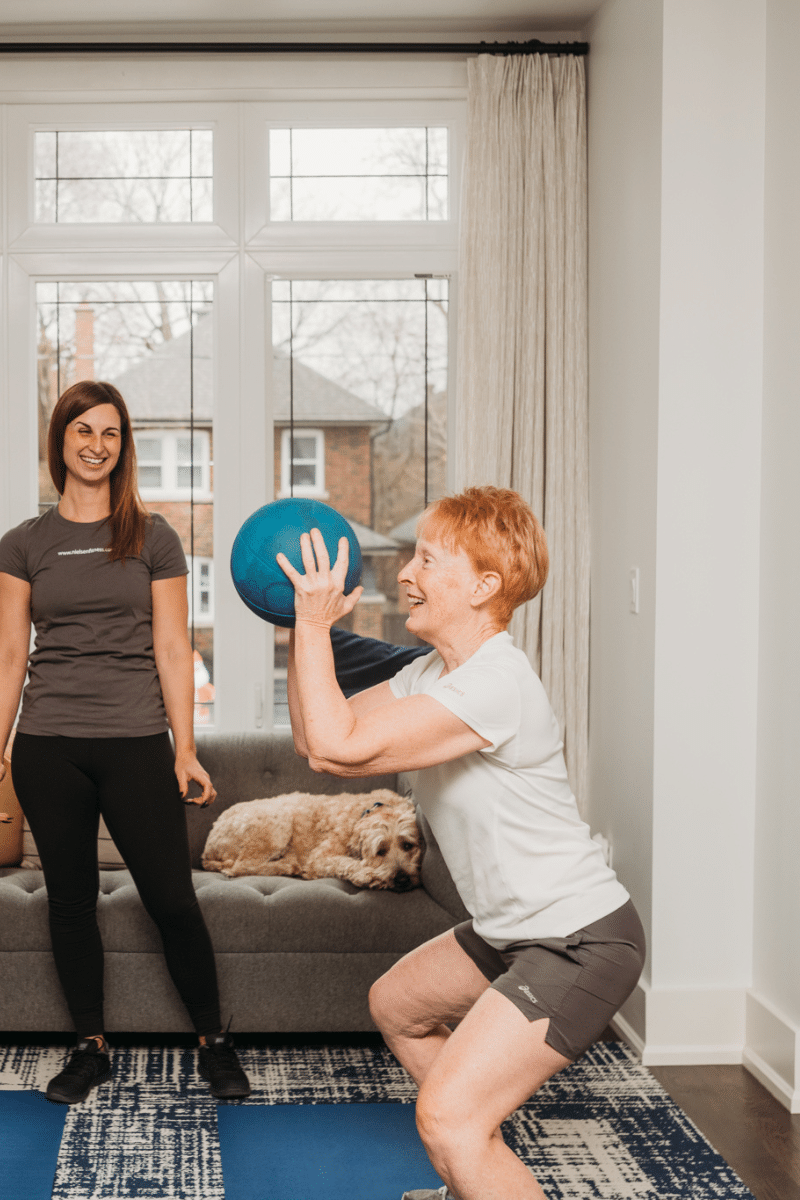
Working with an in-home personal trainer can make a significant difference here. Having someone physically present to correct your form in real time ensures that your movement pattern supports your body instead of working against it. If that’s not an option, a virtual personal trainer can still provide detailed coaching and video feedback to help you refine your technique.
WEAK GLUTES AND HIPS
Your knees don’t operate in isolation. They rely heavily on the strength and stability of the muscles above and below them, especially your hips and glutes. If your glutes are weak or underactive, your knees are forced to compensate during squats. This often results in excessive forward knee movement or inward collapse, both of which increase stress on the joint.
This is something we frequently identify when working with clients, whether in person or through virtual personal training. Strengthening the posterior chain, particularly the glutes, can dramatically reduce knee discomfort and improve overall squat mechanics.
LIMITED MOBILITY
Another overlooked factor is mobility. “We often think of exercise in terms of cardio and strength, but stretching is a crucial-and often overlooked-component of a complete fitness routine. While it may not get your heart racing or leave your muscles burning, consistent stretching can make a noticeable difference in how your body feels and moves each day” (Harvard Health, 2026).
Tight ankles, hips, or calves can restrict your ability to perform a proper squat, forcing your knees into compromised positions. For example, limited ankle mobility can prevent your knees from tracking naturally over your toes, causing your heels to lift or your knees to compensate in ways that lead to pain.
A well-designed home workout plan should always include mobility work alongside strength training. This is an area where an experienced in-home personal trainer near you (or a virtual personal trainer) can assess your limitations and prescribe targeted stretches and drills to improve your range of motion.
DOING TOO MUCH
Progression matters. Many people jump into high-repetition or heavily loaded squats without building a proper foundation first. Your joints, tendons, and ligaments need time to adapt to increased demands. When you overload them too quickly, your knees often take the hit.
We often see clients who are highly motivated but lack a structured progression strategy in their home workout plan. A professional personal trainer can help you scale your workouts appropriately, ensuring that your strength develops safely over time.
LACK OF VARIETY
If your workout routine revolves around squats and little else, your knees may start to feel the strain. Repeating the same movement pattern without variation can lead to overuse issues.
A balanced home workout plan should include a mix of movement patterns, such as hinges, lunges, step-ups, and posterior chain exercises. This reduces repetitive stress on the knees and creates more balanced strength throughout the body.
FOOT POSITION AND ALIGNMENT
Something as simple as how your feet are positioned can have a big impact on your knees during squats. If your stance is too narrow, too wide, or your feet are angled incorrectly for your body mechanics, your knees may track improperly. This can create torque and stress in the joint over time. Everyone’s anatomy is slightly different, which means there’s no one-size-fits-all squat stance.
PRE-EXISTING CONDITIONS
For someone with arthritis, squatting can irritate the knees because the movement places compressive and shear forces across already inflamed or degenerated joint surfaces. Conditions like osteoarthritis often involve cartilage wear, reduced joint space, and stiffness, which means deeper knee bends can increase pain, swelling, or a grinding sensation.
“If you have osteoarthritis of the knees, exercise should and can still be a part of your lifestyle. The key is to know the right exercises and the right way to do them” (Healthline, 2023). Limiting depth to a pain-free range, keeping the knees aligned over the toes, and emphasizing hip movement (hinging back rather than dropping straight down) can reduce stress on the joint. Using support like a chair, performing partial squats, or focusing on controlled tempo can also help maintain strength without aggravating symptoms.
PREVIOUS INJURY
For those recovering from a knee injury or surgery (such as ACL reconstruction), squatting can be beneficial but requires even more caution. The knee may still be regaining stability, strength, and proper movement patterns, so poor technique or excessive load can slow recovery or risk reinjury.
Early on, guided variations like assisted (TRX) squats, wall sits, or box squats are often safer, as they allow better control over range of motion. Gradual progression, proper warm-up, and attention to symmetry between legs are key. It’s also important to follow guidance from a physical therapist, since the appropriate squat depth and intensity depend heavily on the stage of healing and the specific structures involved.
NEVER IGNORE PAIN
Pain is your body’s way of telling you something isn’t right. Unfortunately, many people push through knee discomfort, assuming it’s just part of the process. If squatting consistently causes pain, it’s important to stop and assess the situation. Continuing to train through discomfort can lead to more serious issues that take longer to resolve. A qualified trainer can help you modify your workout plan to avoid aggravating movements while addressing the root cause of the problem.
RECOVERY AND LIFESTYLE
Knee pain isn’t always just about what happens during your workout. Recovery, daily habits, and overall lifestyle also play a role. Sitting for long periods, wearing unsupportive footwear, or neglecting recovery strategies can all contribute to joint discomfort.
OUR TIPS
The goal isn’t to eliminate squats from your routine, it’s to perform them in a way that supports your body. This starts with mastering proper technique, improving mobility, and building strength in the right areas. It also means choosing squat variations that suit your current ability level before progressing to more advanced movements.
A personalized home workout plan can make all the difference here. Instead of guessing what your body needs, you’re following a structured approach designed specifically for you.
WHY PROFESSIONAL GUIDANCE MATTERS
One of the biggest advantages of working with a trainer is having an objective eye on your movement. An in-home personal trainer near you can provide hands-on corrections and immediate feedback, while a virtual personal trainer offers flexibility and accessibility without sacrificing expert guidance. Both options ensure that your home workout plan is tailored to your goals, your body, and your limitations, helping you avoid common mistakes that lead to knee pain.
FINAL THOUGHTS
Squats are one of the most effective exercises you can include in your routine, but only when done correctly and in the right context. If your knees are hurting, it’s not something you should ignore or push through. More often than not, it’s a sign that something in your movement, strength, or programming needs to be adjusted. With the right guidance, you can continue to squat safely, build strength, and stay pain-free.
If you’re dealing with knee pain or want to make sure your workouts are truly working for you, it might be time for expert support. Book your free first session with Nielsen Fitness today and discover how a personalized approach with an in-home personal trainer or virtual personal trainer can transform your workout plan and help you move pain-free.