
Exercise Fitness Tips Functional Strength
November 7th, 2025
New to the Gym? Try These Beginner-Friendly Exercises
At Nielsen Fitness, we value healthy function and longevity above all other aspects of training. We work with clients of all fitness levels, often meeting beginners who want to start working out but feel unsure of where to begin. When it comes down to it, building a strong foundation of fitness doesn’t require fancy equipment or complicated moves. It’s about mastering the basics that strengthen your entire body and improve everyday movement. Here are five of our favourite, beginner-friendly exercises that we regularly use in our clients’ programs.
1. GLUTE BRIDGES
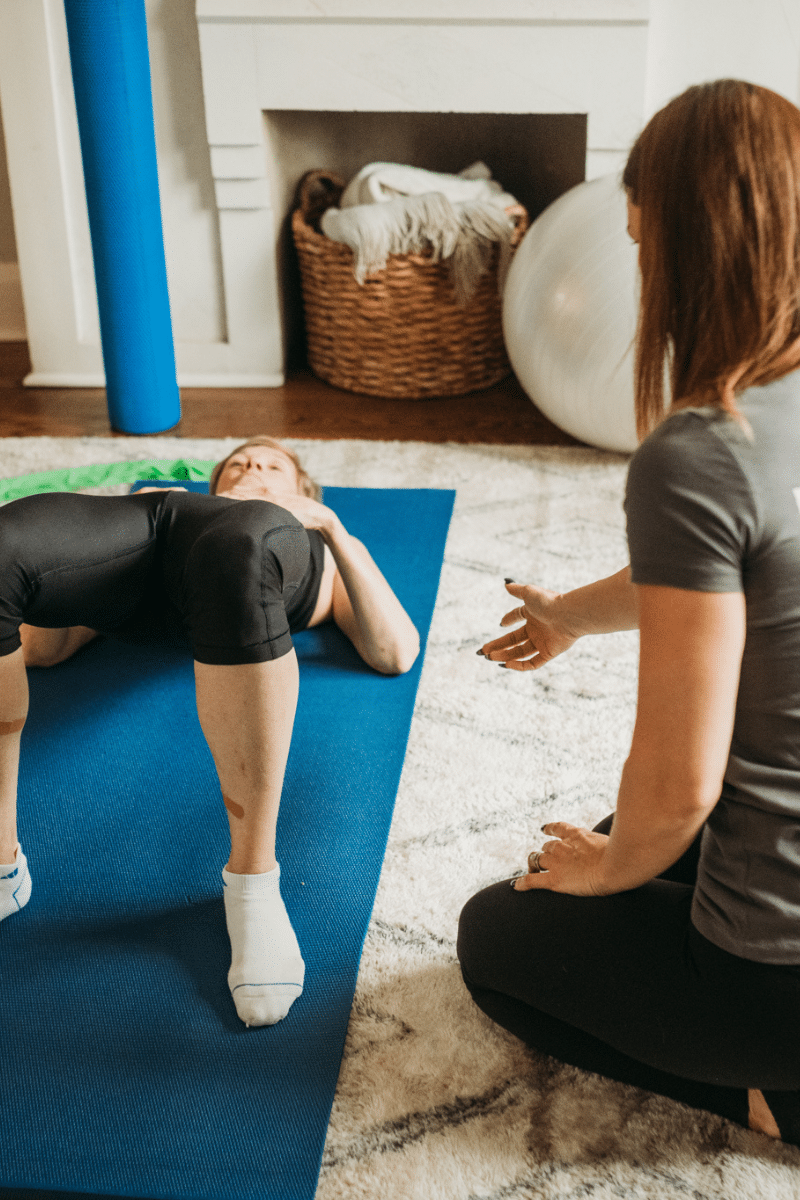
Glute bridges are an excellent starting move because they strengthen the posterior chain (the muscles that run along the back of the body) while also improving hip mobility and posture. They’re also performed from the floor, which eliminates balance challenge while taking pressure off of the joints.
On top of hitting your glutes, bridges strengthen your hamstrings and lower back, helping counteract the effects of long hours spent sitting. Strengthening these muscles also protects your spine while improving posture.
“The role of the glutes is to stabilise the pelvis and the hip. Without adequate stability, you run the risk of overloading the pelvis. Glutes unable to provide adequate support will mean they have to call upon your back muscles to take over, putting unnecessary strain and load through the thoracic, lumbar and sacrum sections” (Men’s Health, 2025).
To perform a bridge, lie on your back with bent knees and your feet hip-width apart on the floor. Press through your heels and squeeze your glutes and hamstrings to lift your hips toward the ceiling until your body forms a straight line from shoulders to knees. Squeeze at the top, then lower slowly. Keep your core braced and avoid arching your lower back. If you’re just starting out, reduce your range of motion.
To progress, try single-leg glute bridges or add a resistance band around your legs. Our in-home and virtual personal training clients with gym set-ups can progress even further to barbell hip thrusts (advanced).
2. DEAD-BUGS
Dead-bugs are a go-to core exercise for beginners because they teach coordination and control without putting pressure on the spine. They target the deep core muscles to improve stability for everyday movement. Dead-bugs also don’t require you to lift your head off the floor, which can be taxing on the neck.
To perform a dead-bug, lie on your back with your arms extended toward the ceiling (palms in) and your knees bent at 90 degrees. Slowly lower one arm and the opposite leg toward the floor while keeping your lower back pressed firmly to the ground/mat. Return to the start and repeat on the other side.
Beginners can move just their arms or legs to start. For progression, hold a light weight in your hands or extend both limbs further from your body.
3. BIRD-DOGS
Bird-dogs improve balance, coordination, and stability. They strengthen the core, glutes, lower back, and shoulders, teaching your body to work as a unit. The bird-dog is “suitable for people of all levels, including older adults, and it can be used to prevent injury, align your spine, and recover from low back pain” (Healthline, 2023). It’s particularly helpful for those who sit a lot or struggle with posture, as it encourages proper spinal alignment.
To perform bird-dogs, start on your hands and knees with your wrists under shoulders and knees under hips. Engage your core and slowly extend your right arm and left leg at the same time until they’re in line with your body. Hold briefly, then return to start and switch sides. If balance is tricky, lift just your arm or leg at a time. To progress, add a pause at full extension or a crunch when your limbs come toward each other (elbow to knee).
4. PLANKS
Planks are one of the most effective total-body exercises you can do, and they’re fantastic for beginners when performed with proper form. They engage your abs, shoulders, glutes, back, and legs, building strength and endurance across your whole body. Planks also help develop the core stability needed for almost every other exercise.
To do a plank, begin on your forearms and toes, keeping your body in a straight line from head to heels. Engage your core, squeeze your glutes, and hold for as long as you can maintain good form. If you’re new to planks, start on your knees. To progress, add plank shoulder taps or mountain climbers.
5. SQUATS
Squats are one of the most functional exercises because they mimic everyday movements like sitting and standing. They strengthen the quads, hamstrings, glutes, and core, while also improving mobility in the hips and ankles. Squats teach proper movement mechanics that carry over into countless daily activities and more advanced exercises. “They also lower your chances of injuring your knees and ankles. As you exercise, the movement strengthens your tendons, bones, and ligaments around the leg muscles” (Web MD, 2023).
To practice squats, stand with your feet shoulder-width apart, chest lifted, and core engaged. Push your hips back as if sitting into a chair, keeping your knees aligned with your toes. Lower until your thighs are parallel to the ground, then drive through your heels to stand.
If you’re new to squats, practice with a chair behind you to guide your depth and provide support (our in-home and virtual personal trainers often opt for this variation when working with clients who have knee issues). To progress, try goblet squats with a dumbbell, add pulses at the bottom, or increase your tempo for a cardio boost.
FINAL THOUGHTS
Beginning a fitness routine doesn’t have to be intimidating. With the right guidance and a focus on proper technique, these five exercises can help you build strength, stability, and confidence. When you’re ready to take the next step, our team of virtual personal trainers and in-home personal trainers in in Toronto, Collingwood, London, Hamilton, and Ottawa can help you design a personalized program that fits your goals and lifestyle.