
Core Strength Fitness Tips Functional Strength
December 19th, 2025
Best Standing Exercises for Better Core Strength
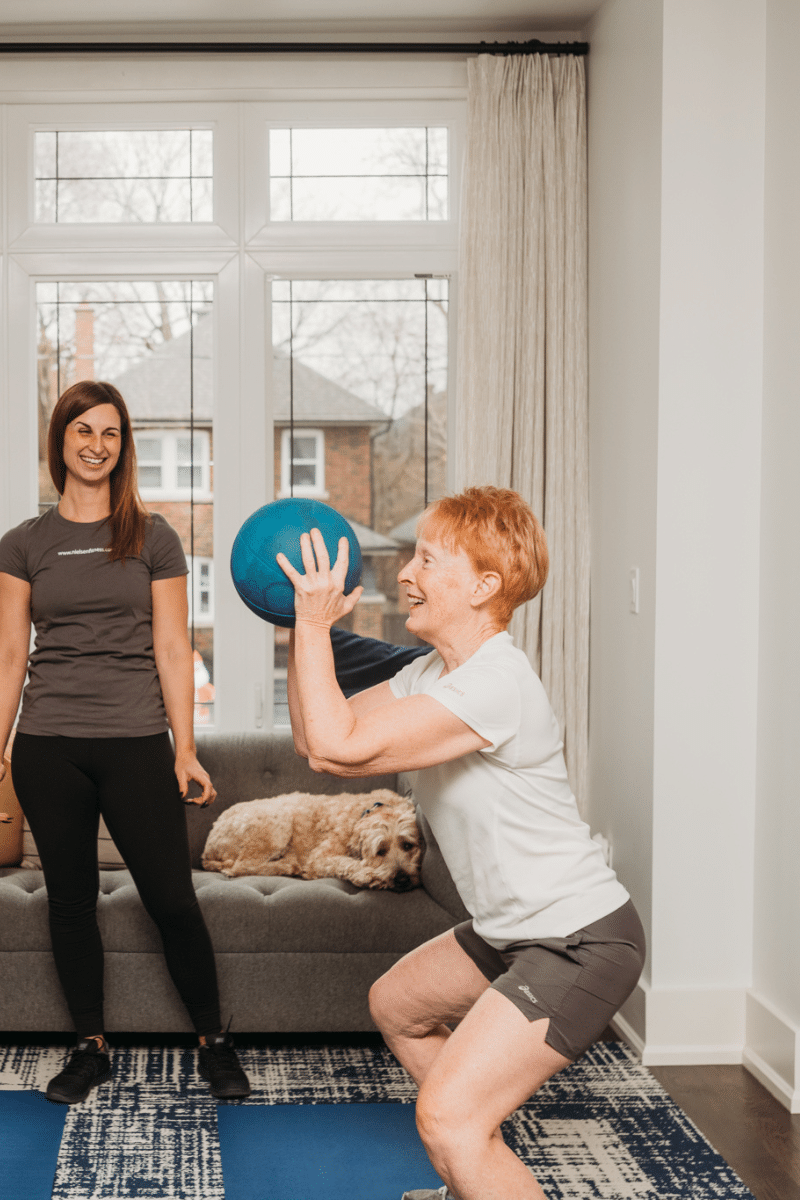
When most people think of core training, they picture planks and crunches performed lying on the floor. But as experienced in-home and virtual personal trainers working with clients across Toronto, Collingwood, London, Hamilton, Ottawa, and beyond, we’ve found that standing core exercises often deliver better results — especially for our clients looking to build functional strength that translates to everyday life. Standing core work builds stability, improves balance, and strengthens your midsection in ways that mirror how you actually move throughout your day. Check out some of our Nielsen Fitness trainers putting these principles into action here!
UNDERSTANDING YOUR CORE MUSCLES
“While many people may use the terms “core” and “abs” synonymously, they are different. The abdominals are just some of the muscles that make up your core” (Very Well Health, 2025). This powerhouse region includes your rectus abdominis (the “six-pack” muscles), internal and external obliques (which run along your sides and help with rotation), transverse abdominis (the deep stabilizing layer that acts like a natural weight belt), erector spinae (the muscles running along your spine), and even your glutes and hip flexors.
Together, these muscles work as an integrated system to support your spine, transfer force between your upper and lower body, and keep you stable during virtually every movement you make. When we design personal training programs, we focus on using all of these muscles together rather than isolating individual areas.
WHY CORE STRENGTH MATTERS
A strong core is the foundation for almost everything you do. Core strength protects your lower back from injury, improves your posture, enhances your balance and stability, and allows you to generate more power in athletic movements. Many of our in-home and virtual personal training clients report that after consistently working their core, they experience less back pain, move more confidently, and find that other exercises — like squats and overhead presses — suddenly feel easier and more controlled. In fact, a 2021 review of studies found consistent evidence to support the hypothesis of improved balance, independence, and quality of life in older adults who completed daily core strength exercises.
THE STANDING CORE ADVANTAGE
While floor-based core exercises certainly have their place, standing core movements offer unique benefits that make them ideal for certain populations. For older adults or anyone with mobility limitations, standing exercises eliminate the challenge of getting down to and up from the floor. For people dealing with neck or shoulder discomfort, standing core work removes the strain that can come from traditional crunches.
Standing exercises are also more functional: they train your core in positions you actually use in daily life, improve balance and proprioception, and can be easily modified for any fitness level. As fitness professionals, we frequently incorporate standing core exercises for clients who are working in small spaces, returning from injury, or simply looking for a fresh approach to building core strength.
OUR FAVOURITE STANDING CORE EXERCISES
Standing Dumbbell Twists: Hold a single dumbbell (or other weight) with both hands at chest height, arms extended but not locked. Stand with your feet shoulder-width apart and knees slightly bent. Engage your core and rotate your torso to the right, bringing the dumbbell across your body while keeping your hips facing forward. Return to center, then rotate to the left. The key is controlling the movement through your obliques rather than swinging with momentum. Start with a light weight and perform 10-12 rotations per side. This exercise is a staple in many of our programs because it requires minimal equipment and effectively targets the obliques.
Standing Dumbbell Pass: This variation adds an anti-gravity challenge. Hold a dumbbell in your right hand at your side. Engage your core, lift the dumbbell straight up alongside your body to shoulder height, then pass it overhead to your left hand. Lower the weight down your left side. The goal is to keep your torso stable and resist tilting as the weight shifts sides. This seemingly simple movement forces your core to work hard to maintain alignment. Perform 8-10 passes in each direction, focusing on smooth, controlled transitions.
Partner Resistance Rotations: This is one of our favorite exercises to do during in-home personal training sessions. Stand with feet hip-width apart and have your trainer stand in front of you. Clasp your hands together at chest height with arms extended. Your trainer will apply gentle resistance as you rotate your torso to one side while you resist and maintain your position for 5-10 seconds. The trainer then releases, and you rotate to the other side where they’ll apply resistance again. This isometric exercise builds tremendous rotational stability and teaches you to maintain a strong core position under external pressure. Aim for 6-8 holds per side.
Standing Cable Rotations (Pallof Press Variation): If you have access to a cable machine or resistance band anchor, this exercise is incredibly effective. Set the cable at chest height and stand perpendicular to the machine. Grab the handle with both hands and step away until there’s tension in the cable. Hold the handle at your chest, then press your arms straight out in front of you, resisting the cable’s pull to rotate your torso. Hold for 2-3 seconds, then bring your hands back to your chest. The cable wants to pull you toward the machine, but your core’s job is to keep you facing forward. Perform 10-12 reps, then switch sides. For our virtual personal training clients, we often substitute resistance bands anchored to a sturdy door or post.
FINAL THOUGHTS
The beauty of standing core exercises is their accessibility. Whether you’re working with a virtual personal trainer from the comfort of your living room or training with an in-home personal trainer, these movements can be adapted to your fitness level and available equipment. Start with 2-3 standing core exercises twice per week, focusing on quality of movement over quantity.
As your strength improves, you can increase the weight, resistance, or number of repetitions. Remember that core training should feel challenging, but never painful. If you experience any sharp discomfort, stop the exercise and consult with your trainer or healthcare provider. And remember, if you’re looking for professional guidance and tip-top training, connect with Nielsen Fitness today!