
Core Strength Exercise Fitness
October 24th, 2025
Top 5 Tips for Better Core Strength
Your core is the foundation for almost every movement you perform, supporting proper stability, posture, and protection of the back and spine. At Nielsen Fitness, we often see clients underestimate the power of a properly activated core. Whether you’re working with a virtual personal trainer or one of our in-home personal trainers in Toronto, Collingwood, London, Hamilton, or Ottawa, mastering core engagement can completely transform the way you move and feel.
THE BASICS OF CORE STRENGTHENING
Before diving into how to engage your core, it’s important to understand what the core actually is. Your core isn’t just your abs — it includes your lower back, diaphragm, pelvic floor, and even your hips. These muscles work together to stabilize your spine and pelvis during movement. When properly engaged, the core acts like a natural weight belt, supporting your body from the inside out.
Many people unknowingly overuse their outer abdominal muscles while neglecting the deeper stabilizers like the transverse abdominis. Learning to activate all layers of your core is the key to better strength, balance, and injury prevention.
1: START WITH BREATH
“Breathing is perhaps the most important part of engaging your core because you must know how to continue breathing like normal while keeping your core tight. Every time you breathe, you have another chance to engage your core and create that strong cylinder of muscles from your ribs to your hips” (Very Well Fit, 2024). One of the first things we teach our clients — whether in-home or during a virtual personal training session — is how to breathe correctly. Shallow chest breathing limits engagement of the deep abdominal muscles, while diaphragmatic breathing helps activate them effectively.
Try this: place one hand on your chest and one on your belly. As you inhale through your nose, let your belly expand instead of your chest. On your exhale, gently draw your belly-button toward your spine while keeping your ribs down. This simple practice strengthens the mind-body connection and helps you engage your core without tensing or holding your breath.
2: BRACE, DON’T SUCK IN
A common mistake people make is sucking in their stomach to “tighten” the core. This actually weakens core engagement over time. Instead, think of bracing — like you’re preparing to be lightly punched in the stomach. Yes, the belly-button draws to the spine, but the rib-cage must close as well; “think of it as creating a stiff muscular corset, which protects your back and nervous system” (Healthline, 2022).
The goal isn’t to make your abs look smaller but to create tension and stability. When you brace correctly, you’ll feel your obliques, lower back, and deep abdominal muscles activate all at once. This bracing technique is crucial for exercises like squats, deadlifts, and planks.
3: KEEP THE PELVIS NEUTRAL
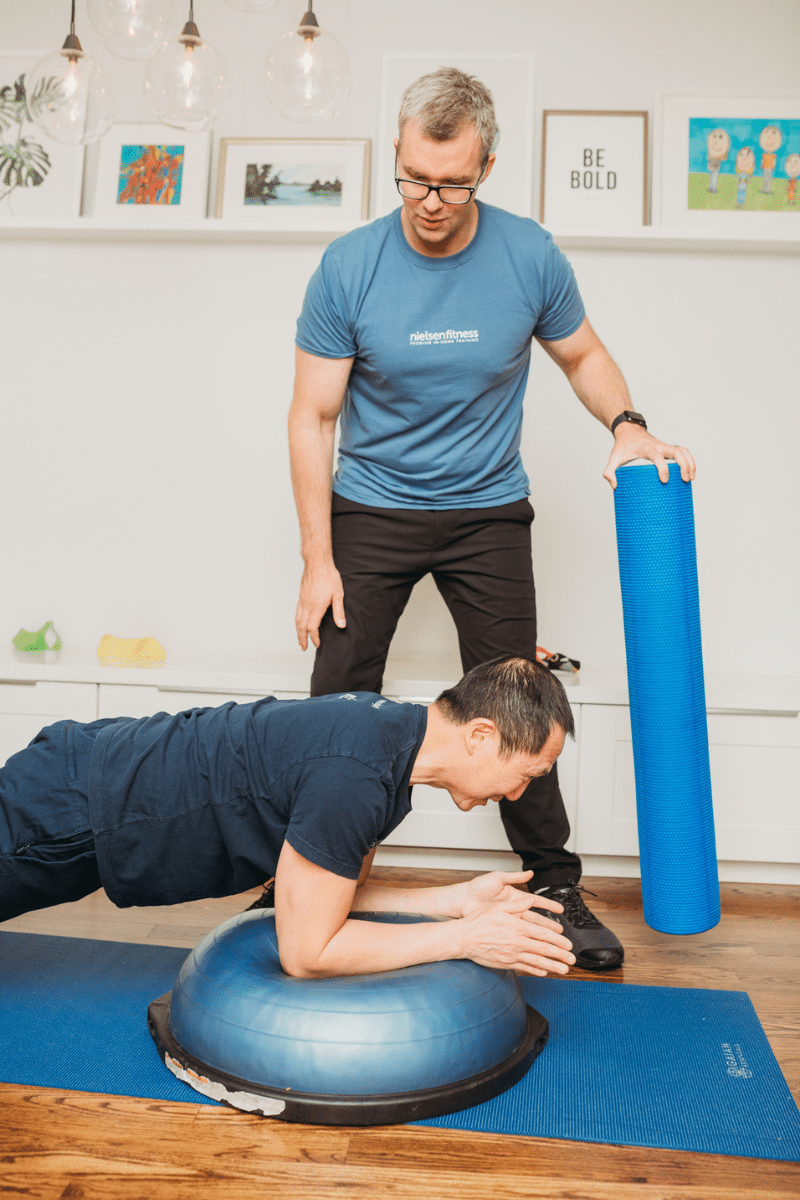
Your pelvic position plays a big role in effectively engaging your core. Many people arch their lower back excessively or tuck their hips under too much. The ideal position is actually a neutral pelvis. You can find this position by standing tall and gently rocking your pelvis forward and back until your spine feels balanced and natural. Maintaining this alignment during workouts allows your core to activate optimally and prevents unnecessary strain on your lower back. If you’re struggling to find your neutral spine on your own, one of our in-home personal trainers can use hands-on guidance to assist.
4: THINK ABOUT FUNCTION
Engaging your core isn’t limited to traditional ab exercises. The most effective way to train your core is by integrating it into functional movements: exercises that mimic real-life activities. Movements like squats, rows, and push-ups all require core stability when done correctly. Focus on maintaining tension through your midsection while performing these exercises to strengthen your core dynamically. It’s the core’s job to resist unwanted movement, not just create it. By keeping your spine stable while your limbs move, you’re training your core to perform its true purpose, which is stabilizing the body through motion.
5: PRACTICE DAILY AWARENESS
Proper core engagement isn’t something that happens automatically — it requires consistent practice and mindful awareness. Every time you sit, stand, lift, or walk, there’s an opportunity to activate your core. Over time, this awareness becomes second nature. The more consistently you focus on alignment, breathing, and bracing, the stronger and more supportive your core will become.
Clients who train regularly with our in-home and virtual personal trainers often notice improved posture, reduced back pain, and better overall control of their movements because their training reinforces good core habits every session.
FINAL THOUGHTS
A properly engaged core doesn’t just enhance your workouts — it impacts every aspect of your life. For athletes, it translates to better performance, and for everyday movers, it means improved balance and endurance. Our team of trainers has seen time and again how learning to engage the core properly transforms both movement quality and confidence.
If you’re unsure whether you’re engaging your core correctly, consider working with a trainer who can assess your form and offer personalized feedback. Mastering core engagement is one of the best investments you can make in your long-term health and performance!