
September 2nd, 2026
3 Signs Your Form Is Wrong: Trainer Tips to Actually Fix It, Now
Most people don’t lose good form all at once. It doesn’t necessarily happen the day you rack a heavier bar or add an extra rep. It usually slips gradually — a few degrees off here, a little momentum there — until one day your knees ache after squats that used to feel effortless, or your lower back tightens up after a set of deadlifts you’ve done a hundred times before. This is one of the most common patterns a trainer sees in the gym. Technique doesn’t collapse overnight, it erodes quietly, and because it happens slowly, most lifters don’t notice until something actually hurts.
The good news is that quiet form breakdown almost always shows warning signs before it turns into an injury. You just have to know what to look for. Below, we walk through the three signs a trainer watches for most closely, why they matter, and exactly what to do about each one starting with your very next workout.
WARNING #1: JOINTS ARE TALKING LOUDER THAN MUSCLES
If you finish a set and what you feel is joint discomfort rather than muscle fatigue, that’s your body telling you something in the movement pattern has shifted. A properly executed squat should load your quads, glutes, and hamstrings. A properly executed bench press should load your chest, shoulders, and triceps. When you start feeling it in your knees, wrists, or lower back instead, the muscles that are supposed to be doing the work have stopped doing their job, and your joints are absorbing the slack.
This is one of the clearest signals used in trainer injury-prevention protocols; “persistent pain may indicate poor form or an injury risk” (PTSMC, 2025). The fix here isn’t to push through it. Drop the weight by 20 to 30 percent and rebuild the movement from the ground up, focusing on where you actually feel the tension. If joint discomfort persists even at lighter loads, that’s a cue to have a personal trainer or a medical professional take a closer look before you add weight back.
WARNING #2: YOU’RE CHASING THE REP COUNT
This is the sign we catch most often with clients who train alone. Somewhere along the way, the goal quietly shifts from “complete this movement well” to “complete this movement.” You start using momentum to swing a dumbbell curl up, or you let your hips shoot backward to finish a squat that your legs can no longer control cleanly. The rep gets checked off, but the muscle you were trying to train barely worked, and a joint or connective tissue picked up the load instead.
In fact, “most weight training injuries occur from swinging the weights, improper technique or lifting too heavy an amount of weight” (Mayo Clinic, 2024). The fix is simple but requires honesty: slow the tempo down. Count two seconds on the lifting phase and four seconds on the lowering phase. If you can’t control the weight at that speed without swinging, jerking, or bracing awkwardly, the weight is too heavy for where your technique currently is — not too heavy for your ego, but too heavy for your joints. A personal trainer will usually spot this within the first two or three reps of a set, which is exactly why a technique check-in every few weeks is worth the time.
WARNING #3: YOUR RANGE OF MOTION HAS QUIETLY SHRUNK
The third sign is the hardest to catch on your own because it develops gradually and you adapt to it without realizing. Squats that used to reach parallel now stop a few inches short. Overhead presses that used to lock out fully now stall halfway up. Rows that used to pull your shoulder blades together now barely move your arm. None of this feels dramatic in the moment, which is exactly why it’s dangerous; a shrinking range of motion is often the body’s way of protecting a joint it no longer trusts, and it usually means an imbalance has been building for a while.
This connects directly to what trainers call corrective exercise, where addressing muscle imbalances early prevents them from compounding. To fix this, film yourself from the side during a familiar lift and compare it to footage from a few months ago. The difference is often more obvious on video than it feels in your body. From there, spend two to three minutes before your session on mobility work targeting the joint that’s lost range, and reduce the load until full range of motion returns.
HOW A PERSONAL TRAINER CATCHES WHAT YOU CAN’T SEE
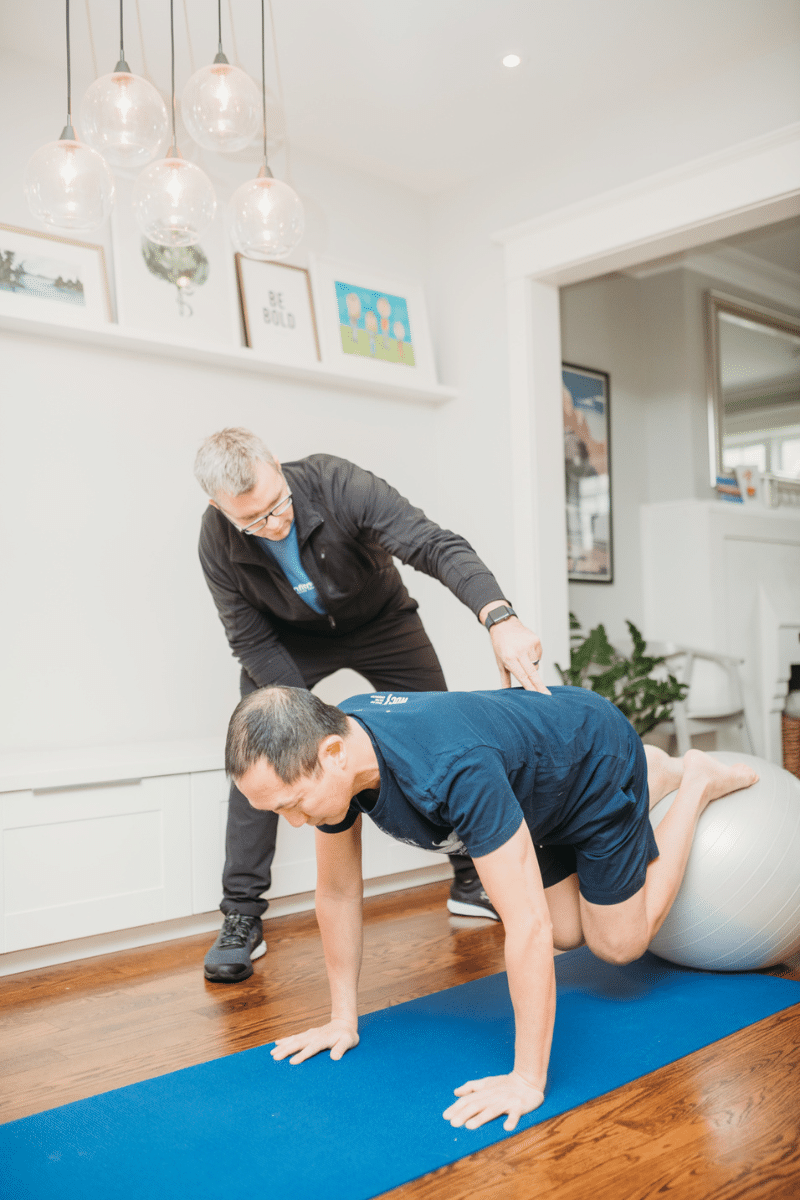
All of these warning signs are far easier to spot in someone else than in yourself. When you’re mid-set and focused on finishing the rep, you’re not watching your knee track over your toe or noticing that your lower back has started to round. This is one of the biggest reasons working with a personal trainer pays off long after the beginner phase ends. A trained eye catches the one-degree shift before it becomes the injury that sidelines you for six weeks.
If any of these signs sound familiar, don’t wait for the injury to force the conversation. Reach out to Nielsen Fitness and let one of our personal trainers assess your form, rebuild the movement patterns that matter, and get you training with confidence again.