
Functional Strength Older Adult Exercises Trainer
October 21st, 2026
After 50: Grip Strength for More Than a Strong Handshake
After 50, grip strength becomes an important part of your fitness routine. A firm handshake makes a great first impression, but it is the least important thing your hands do. Strong hands with good grip strength after 50 carry groceries up the porch steps, twist the lids off of stubborn jars, steady you on a handrail, and keep suitcases from sliding off curbs. At Nielsen Fitness, we build our personal training after 50 programs around movements like these, because strength only matters when it shows up in daily life. Grip is one of the first places it shows up, for better or worse.
Grip typically holds steady through midlife and then begins to dip in the late 40s or early 50s. That gradual decline is normal, but it is not something to ignore, because your hands are a surprisingly honest report on the strength of your whole body. It is the reason we treat grip as a core part of personal training after 50 rather than an afterthought. The encouraging part is that grip responds to training at any age, and the work is simple, practical, and easy to add to what you already do.
GRIP STRENGTH AND EVERYDAY INDEPENDENCE
Think through an ordinary week. Groceries hang from your fingers on the walk from the car to the kitchen, and a trip that once took one go can quietly turn into three. A carry-on has to be lifted into the overhead bin or hauled up a flight of airport stairs. Around the house, a full kettle, a cast-iron pan, a laundry basket, a bag of dog food, and the bin that needs dragging to the curb all ask your hands to hold on while the rest of your body moves. None of these tasks announces itself as strength training, yet each one is exactly that.
When grip fades, people rarely announce it either. They simply stop carrying the second bag, ask someone else to lift the suitcase, or retire the heavy pan for a lighter one. Each workaround is small, but together they shrink independence a little at a time. Good personal training after 50 pushes in the opposite direction by keeping everyday tasks easy, so you never have to give them up. That is the real purpose of personal training after 50: not a bigger number on a gym machine, but a longer list of things you can still do without asking for help.
WHAT RECENT RESEARCH SAYS ABOUT GRIP AND AGING
Researchers have been paying close attention. A 2026 study in Aging Clinical and Experimental Research (covered by Men’s Journal) followed more than 20,000 adults over 60 and found that higher grip strength across repeated measurements was linked with better odds of successful aging. The authors concluded that greater cumulative muscle function “may facilitate successful aging.” The coverage is careful to note that this is an association, not proof that squeezing harder extends life, and we agree. What grip does offer is a useful signal about where your overall strength is heading, which is why it earns attention in personal training after 50.
“People who maintain their grip strength age more slowly,” Cleveland Clinic (2023). The word that matters there is maintain. Grip is not a test you pass once. It is a habit you keep up, and that is exactly how we approach personal training after 50. A sudden drop in grip, as opposed to a slow one, is worth mentioning to your doctor, since it can point to something other than aging.
CARRIES: THE BEST GRIP EXERCISE IN PERSONAL TRAINING AFTER 50
If we could keep only one grip exercise, it would be the carry. A farmer’s carry means walking while holding a weight in each hand, and it is the closest thing a gym offers to hauling two bags of groceries. Choose dumbbells or kettlebells you can hold with a tall chest and relaxed shoulders, then walk slowly for 20-30 seconds. When that feels controlled, add distance first and weight second. Many people can start with a pair of light dumbbells and a clear hallway, which makes this one of the most accessible tools in personal training after 50.
You can change the challenge by loading just one side. Hold a single dumbbell or kettlebell at your side and walk without leaning toward it. Your grip holds on while your trunk muscles resist the pull, which is the same job you do when you haul a heavy bag or suitcase through an airport. Swap hands and repeat. The goblet carry, with a weight held at the chest, builds upright posture along with grip. In personal training after 50, the carry, the load, and the distance should always suit your balance, joints, and goals.
HOLDS, HANGS AND PINCHES
Carries train grip while you move, and holds train it while you stay still. A dead-hold simply means standing tall with a weight in each hand and not letting go for 20 to 40 seconds, which builds the strength you use on a heavy pot or a stair rail. A plate pinch, where you pinch two smooth weight plates together with your fingers and thumb, builds the thumb strength behind jar lids, door handles, and a full watering can.
Hanging from a bar is another useful option, though it is not for everyone. Many people start with their feet supported on a bench, and anyone with shoulder concerns should check with a professional first. Finally, do not forget the muscles that open the hand. Simple finger extensions balance out all that squeezing and keep the hand healthy. We add these to personal training after 50 sessions as short finishers rather than whole workouts.
WHOLE-BODY STRENGTH AND PERSONAL TRAINING AFTER 50
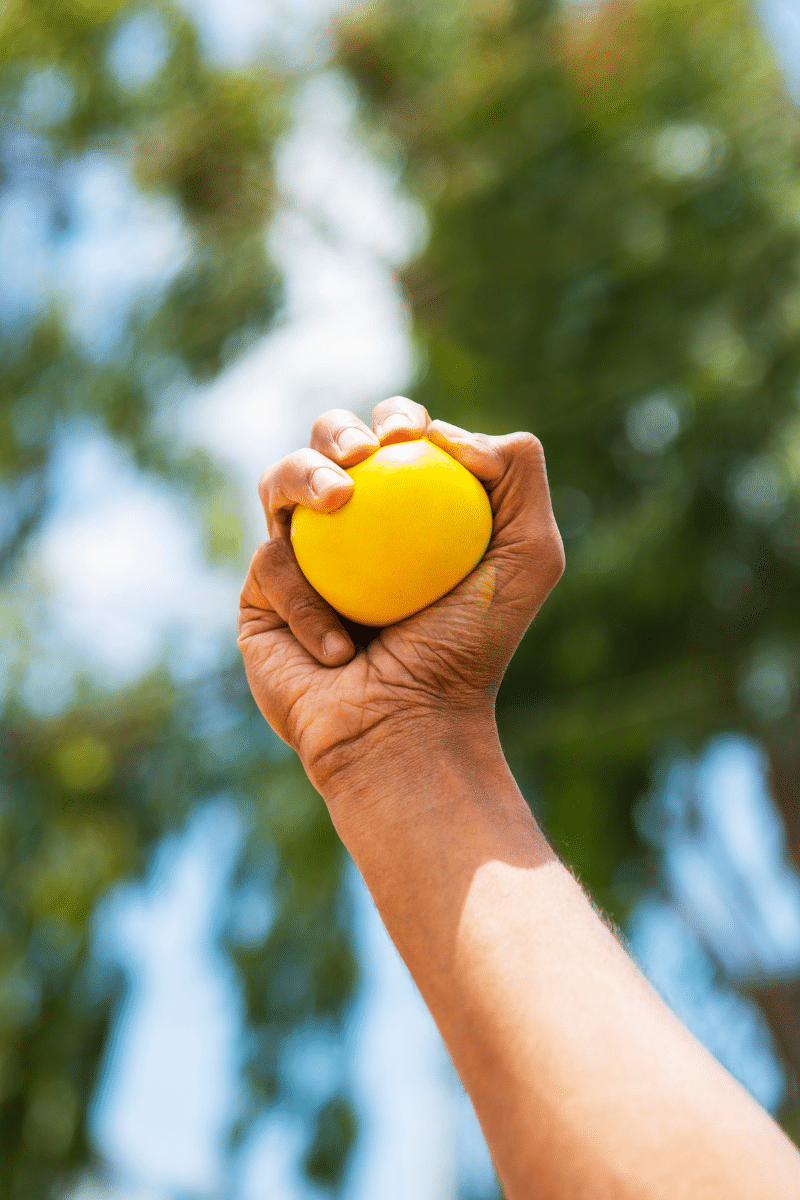
Remember: grip is a window into total-body strength, not a separate project. A carry asks your legs to drive each step, your glutes and trunk to keep you upright, and your upper back to hold your shoulders in place, all while your hands hold on. Rows and deadlifts train your grip through the load itself. Cardiologist Dr. Darryl Leong makes the same point in TIME (2025): “We really need an all-around exercise strategy.” A stress ball in front of the television will never replace squats, rows and carries, and that full-body thinking is the heart of personal training after 50.
TIME also notes that slouched posture can reduce nerve activity and impair grip mechanics, so work for the upper back pays off in the hands. Our guide on whether to do cardio or weights first explains why we usually favour strength work early in a session. Carries and holds make a natural finisher once your main lifts are done, which is how many of our personal training after 50 sessions are structured.
HOW OFTEN TO TRAIN GRIP IN PERSONAL TRAINING AFTER 50
Grip does not need its own day. Two or three sets of carries or holds at the end of a strength session is plenty for most people, and the right amount depends on your goals, experience and recovery. Our post on how often to strength train after 50 walks through how to weigh those factors. Forearms and fingers can get irritated if you add too much too soon, so our post on signs your program needs more recovery is worth a read if your hands feel sore, tired, or tight. The best personal training after 50 plans build in that balance between effort and rest.
GETTING STARTED WITH A TRAINER
Nielsen Fitness has been training clients since 2006, with a specialty in older adults. We work in people’s homes, in our Toronto and Collingwood studios, and virtually. Every session is customized to your physical history, present fitness, and personal goals. Personal training after 50 at Nielsen Fitness builds grip into the same plan as balance, overall strength, and functional stability, because the goal is a body that works well as a whole.
If you’ve been thinking about starting an exercise program to support your long-term health and fitness, now is always a good time to act. Contact Nielsen Fitness today to get started.