
October 23rd, 2026
Exercise for Arthritis: How to Build Strength Around Joints
When a joint hurts, the natural instinct is to protect it by doing less. We hear that from clients all the time, and we understand it. The problem is that less movement usually means weaker muscles, stiffer joints, and a shrinking comfort zone, which makes the next flare-up feel even worse. Well-designed exercise for arthritis works the other way around. It builds the strength that takes load off the joint and keeps you doing the things you love.
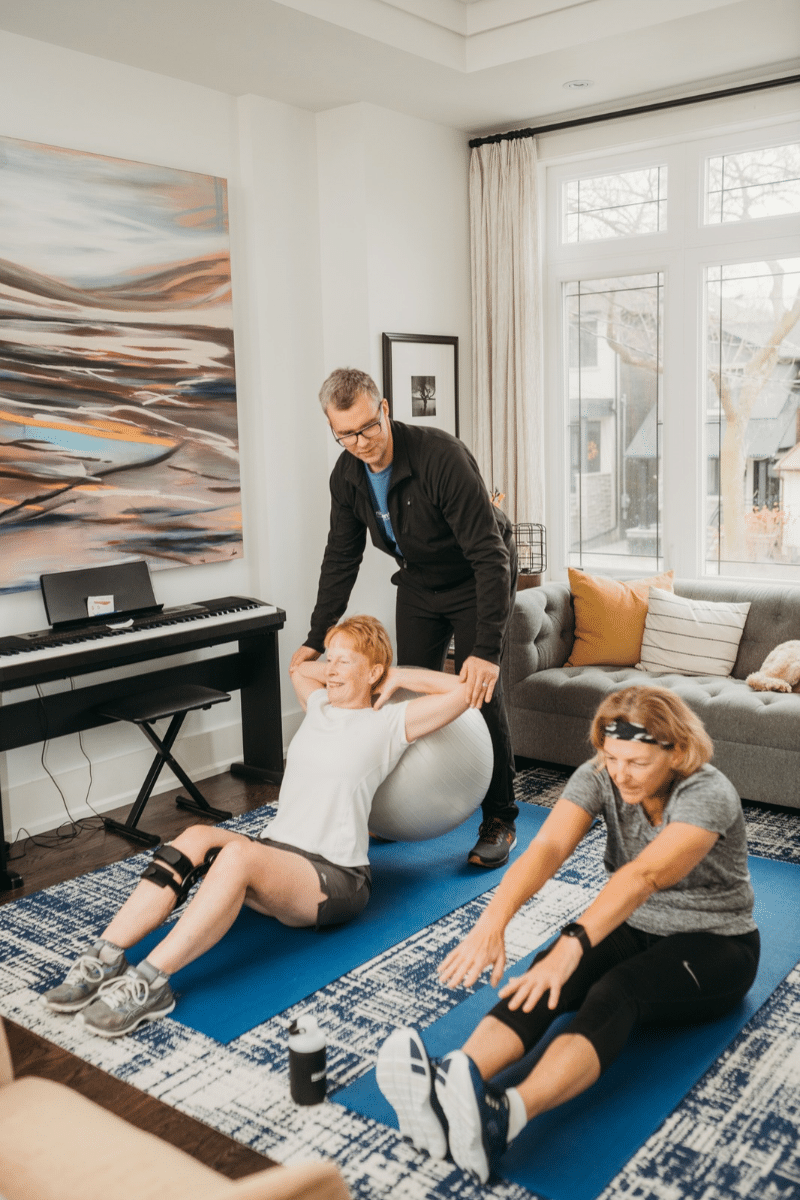
At Nielsen Fitness, our team of in-home and virtual personal trainers works with arthritis every week. This post explains how we approach exercise for arthritis in practical terms: how we adjust range of motion, resistance, tempo, and exercise selection, how we prepare joints before harder work, and where your medical team fits in. It is general information rather than a prescription, but it will show you what thoughtful coaching looks like.
WHY EXERCISE FOR ARTHRITIS IS WORTH THE EFFORT
Arthritis is an umbrella term. Osteoarthritis involves wear and tear in the cartilage, most often in the knees, hips, and hands, while rheumatoid arthritis is an inflammatory, autoimmune condition that behaves and flares differently. The research on exercise for arthritis is encouraging overall, and most of it focuses on knee osteoarthritis. A 2026 meta-analysis found that resistance training may offer “clinically relevant benefits across the knee osteoarthritis continuum without increasing risk” (Annals of Physical and Rehabilitation Medicine, 2026). A large analysis of 217 trials concluded that “aerobic exercise is likely the most beneficial exercise modality” for knee osteoarthritis (The BMJ, 2025). Read together, those findings match what we see in practice: the best exercise for arthritis is a blend of strength work and low-impact cardio, not one or the other.
ASSESSMENT FIRST: EXERCISE FOR ARTHRITIS IS NEVER ONE-SIZE-FITS-ALL
Two people with the same diagnosis can need very different programs, so we never hand out a generic routine. Our first sessions are about gathering information. We ask which joints are affected, what time of day they feel best, how flares usually show up, and which daily tasks are hardest. Then we watch you move through a few simple patterns, such as standing up from a chair, stepping onto a platform, reaching overhead and gripping a handle. That shows us where your comfortable range ends, which positions bother you, and which muscles aren’t pulling their weight. Everything that follows is built on those answers. Good exercise for arthritis starts with that kind of detail.
RANGE OF MOTION: TRAIN WHERE THE JOINT FEELS GOOD
Most arthritic joints have a comfortable zone and a pinch-y zone. Our job is to train generously inside the comfortable zone and approach the edge gradually. A client with sensitive knees might squat to a high box instead of full depth. A client with a cranky shoulder might raise their arms only to the height before the pinch. Someone with hip arthritis might use shorter steps and a narrower stance.
Pain-free range is rarely fixed. As the muscles around a joint get stronger and the tissues adapt to the work, many people find their usable range grows over weeks, and we lower the box or deepen the movement a little at a time. We use a simple check. Mild discomfort that settles soon after a set and doesn’t linger into the next day is generally part of the process. Sharp, catching, or lingering pain means we change something. Our post on how hard is too hard goes deeper on where that line sits. This kind of adjustment is the heart of safe exercise for arthritis.
RESISTANCE: LIGHT ENOUGH TO CONTROL, HEAVY ENOUGH TO MATTER
The muscles around a joint act like shock absorbers, so strengthening them is one of the most useful things exercise for arthritis can do. That doesn’t mean heavy lifting on day one. We usually start with body weight, resistance bands, light dumbbells, or supported machines, and we choose loads you could lift several more times with good form.
We begin with one or two sets, add repetitions first, and then add weight in small steps. We also change one variable at a time so we can tell what your joints are responding to. For hand and wrist arthritis, we use thicker handles, straps, or hooks so you aren’t forced to grip hard. On stiff or sore days, we lower the load rather than skip the session, because lighter, consistent work still counts. Isometric holds, where the muscle works without the joint moving, can be a gentle starting point for joints that dislike motion under load. Done patiently, resistance training is the backbone of exercise for arthritis that lasts.
TEMPO IN EXERCISE FOR ARTHRITIS: SLOWER IS USUALLY SAFER
Tempo is how fast you move through each repetition, and it is one of our favourite tools because it costs nothing and changes everything. Slowing the lowering phase (for example: taking three seconds to sit down into a chair) builds control and strength with lighter weights. It also removes the jerky, bouncing movement that jolts a sensitive joint. A short pause partway through a movement improves stability and exposes weak spots without adding load.
We avoid fast, ballistic work in the early stages and keep breathing steady throughout. A smooth tempo is a hallmark of well-coached exercise for arthritis, and it makes it easier to notice the moment something doesn’t feel right.
CHOOSING EXERCISE FOR ARTHRITIS: SWAP, DON’T SKIP
Almost every movement has a joint-friendlier cousin. If full squats bother your knees, sit-to-stand work, box squats, or a supported leg press train the same muscles, and our guide to safe squat alternatives covers several. If lunges are uncomfortable, step-ups to a low platform or a supported split squat are often easier. Floor exercises can move to a bench or a standing position, push-ups can be done against a counter or wall, and overhead presses can be replaced with angled presses that keep the shoulders in a happier position.
Low-impact cardio matters too, and walking is a great place to start, as we explain in our post on the benefits of a walking habit. Back pain often travels with arthritis, and our guide to exercises for back pain shows how we handle that. The best exercise for arthritis is the version you can repeat week after week without a flare.
WARM-UPS THAT MAKE EXERCISE FOR ARTHRITIS EASIER ON THE JOINTS
Warm-ups are not optional when joints are sensitive. We build in five to ten minutes before any demanding work. First comes easy movement to raise body temperature, second is controlled joint mobility inside a pain-free range (ankle and hip circles, shoulder rolls, gentle knee bends, and finger openings etc.), and third is activation of the muscles that support the joint. Glute bridges and band side steps help the hips and knees, while shoulder blade squeezes and light band pulls help the shoulders.
We then ramp up with lighter practice sets before the first working set, so the joint has met the movement before it meets the load. If your joints pop or crackle as they warm up, that is usually harmless, and our post on noisy joints explains why strong supporting muscles and a proper warm-up help. A thorough warm-up makes every other part of exercise for arthritis work better.
EXERCISE FOR ARTHRITIS AND YOUR MEDICAL TEAM: WORKING TOGETHER
We are personal trainers, not physicians. We don’t diagnose arthritis, recommend medications, or treat flares. Our role is to design the program, coach the movement, track how your body responds, and adjust as needed. Please check with your doctor or physiotherapist before you start, especially after a new diagnosis, a recent flare, or a joint replacement, or if you take medications that affect your joints or heart. Stop and seek medical advice if you notice swelling, heat, or redness in a joint, sudden or severe pain, a joint that gives way, or pain that wakes you at night.
It’s also worth knowing that the evidence isn’t one-sided. A 2026 umbrella review reported “largely inconclusive evidence on exercise for osteoarthritis” overall, with small and short-lasting effects (RMD Open, via BMJ Group, 2026). The authors cautioned against treating exercise as the sole focus of first-line care. We take that as a reminder that exercise for arthritis works best alongside medical care, education, and good sleep. Good coaching also keeps exercise for arthritis flexible when symptoms change, and with your permission we’re happy to share your program with your healthcare providers.
START EXERCISE FOR ARTHRITIS WITH A FREE CONSULT AND MINI WORKOUT
If you’d like to explore exercise for arthritis with a team that adapts every detail to you, we’d love to meet you. Book your free initial consult and mini workout and we’ll talk through your goals, your joints, and how we can help you build strength with confidence, whether that’s at home, in the studio, or online.