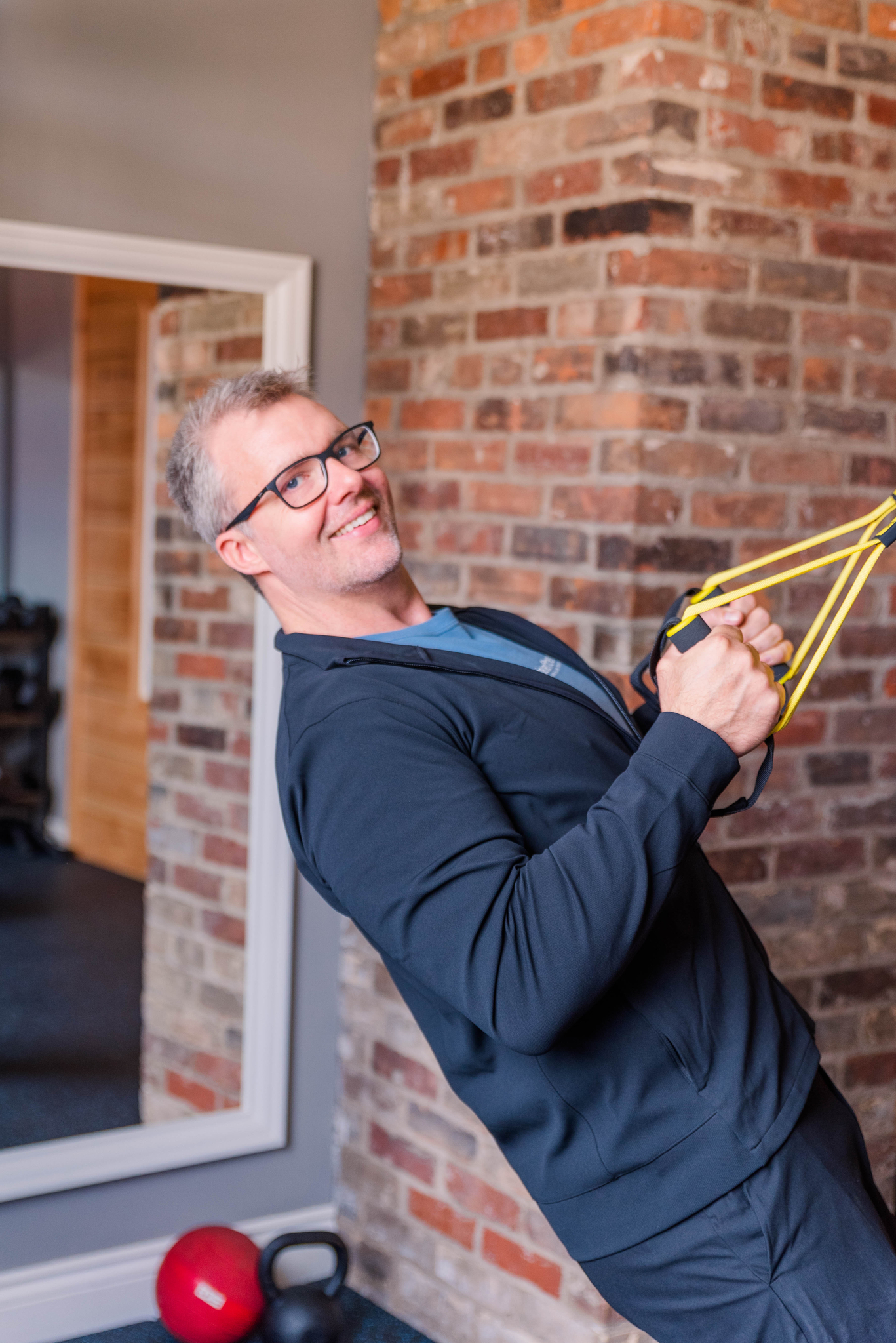
How many reps is enough to see results? While it may seem like a simple question, the answer depends on your specific fitness goals: whether you’re aiming to build strength, mass, endurance, or power. Understanding rep ranges is key to maximizing training sessions in order to achieve your goals. Read on to learn how in-home and virtual personal trainers at Nielsen Fitness tailor clients’ reps to make a real difference.
The Right Number of Reps: Tailoring Your Workouts
REP RANGES
Repetitions (or reps) refer to how many times you perform an exercise before resting. The number of reps you do influences how your body adapts to the stress of the workout and what kind of changes you’ll see. “Different training organizations, such as the American Council on Exercise (ACE) or the National Academy of Sports Medicine (NASM), have slightly different models for each training goal. But they follow the same general guidelines” (Very Well Fit, 2024). There are 4 main categories of rep ranges: strength, hypertrophy, endurance, and power.
STRENGTH
If your primary goal is to increase your maximal strength, the general recommendation is to focus on lower rep ranges – around 1-5 reps per set – using heavier weights. This approach stresses your muscles in a way that forces them to adapt by increasing their ability to lift heavier loads. The load lifted in a strength set should be 85-100% of your one-rep max (1RM), which is the heaviest load you can lift in a single rep of a desired movement.
These heavy sets are then followed by a longer rest – 2-5 minutes – to allow for full recovery. Low reps with high weight improve your nervous system’s efficiency in recruiting muscle fibres, which leads to increases in your strength rather than muscle size. “However, determining a maximum one rep can be difficult for many older adults, as they can hurt themselves if they try lifting too heavy a weight without proper training and support” (Harvard Health, 2023). If you’re new to strength training, we recommend the guidance of an in-home personal trainer.
HYPERTROPHY
“Training for hypertrophy means you’re looking to increase the physical size of your muscles” (Healthline, 2024), where the ideal rep range is around 6–12 reps per set. This strikes a balance between lifting enough weight to challenge your muscles while also creating enough time under tension to promote growth. The weight lifted should be around 65-85% of your 1RM followed by 30-90 seconds of rest between sets.
This moderate rep range creates a high level of metabolic stress (the physiological response of your muscles to the demands placed on them during exercise) and muscle damage, two key factors that trigger muscle growth. A focus on this rep range typically results in muscle size increases rather than just strength.
ENDURANCE
If your goal is to improve muscular endurance, you’ll want to use lighter weight and a higher rep range: typically 12–20 reps per set. This can be useful for those who struggle with prolonged exertion. The weight should be 50-65% of your 1RM followed by 30-60 seconds of rest between sets. High-rep training enables muscles to perform longer before fatigue sets in, which will improve your body’s ability to sustain activity over extended periods.
POWER
For those looking to enhance their power or speed, such as athletes in sports like sprinting, football, or basketball, the rep range is typically 1–6 reps per set with explosive movements. The load is usually 75-90% of your 1RM with 2-5 minutes between sets. Power training targets both strength and speed by challenging your muscles to contract quickly and forcefully. This improves your overall athletic performance, particularly in sports that require rapid acceleration or deceleration.
OUR TIPS
Our in-home personal trainers in Toronto, Collingwood, London, Hamilton, or Ottawa (and virtual personal trainers everywhere) are game-changers when it comes to determining the right number of reps. We design workout plans tailored to your unique fitness goals while ensuring you perform each exercise with proper technique, especially when you’re pushing yourself to lift heavier weights or trying new movements. If you’re unsure of where to start, consider booking a free initial session to assess your goals and get a customized plan.