
March 16th, 2025
Multi-planar exercises: What, why & how
You’re likely familiar with staple exercises like squats, lunges, and push-ups — which are all great options for building strength. But here’s the thing: real life doesn’t happen in straight lines. Whether you’re reaching to grab something off a shelf, twisting to check your blind spot while driving, or chasing after kids or pets, you’re moving in all directions. That’s why multi-planar exercises are so important, and why our in-home and virtual personal trainers love using them to help clients move better, feel stronger, and stay injury-free.
If you’re looking to get the most out of your workouts, keep reading to learn why multi-planar exercises should be a part of your routine.
Multi-Planar Movements: What They Are and Why They Matter
THE BASICS
Multi-planar exercises are movements that train your body to move forward and backward, side to side, and with rotation — just like you do in daily life. These exercises challenge your muscles, core, and balance all at once. There are three planes of motion we move through: the sagittal plane (forward and backward: think squats and lunges), frontal plane (side to side: think lateral lunges or side shuffles), and transverse plane (rotational movements: think twists and chops). “It’s easiest to think of each plane as an imaginary line or a glass plate that divides the body into opposing segments when standing in the anatomical position. To determine the plane of motion of a particular movement, consider how the movement would interact with those three imaginary lines or plates. When a movement runs parallel to the imaginary line or plate, the movement is occurring in that plane of motion” (Very Well Fit, 2024).
Most traditional workouts focus on just one or two of these planes, but when you train in all three, you build strength that actually helps you move better in real life — not just in the gym. This is a key element of the programs designed by our in-home personal trainers in Toronto, Collingwood, London, Hamilton, and Ottawa (and virtual personal trainers everywhere).
THE BENEFITS
From bending, twisting, and reaching, to stepping sideways, multi-planar training helps you move more easily and naturally. Because these exercises work multiple muscle groups at once (especially your core) you’ll naturally improve your balance, coordination, and stability. Whether you’re an athlete or just want to feel more confident and steady on your feet, this is crucial. “You need good balance to do just about everything, including walking, getting out of a chair, and leaning over to tie your shoes. Strong muscles and being able to keep yourself steady make all the difference in those and many other things you do every day” (Web MD, 2023).
Multi-planar training also works muscles and joints from different angles. This helps to prevent overuse injuries while creating a more balanced, resilient, and athletic body. If clients play sports like golf, tennis, soccer, or hockey (activities where moving in all directions is key), our in-home and virtual personal trainers often use multi-planar exercises to improve agility, speed, and power while adding variety and challenge to programming.
OUR FAVOURITE MOVES
(…which you can see demonstrated by trainer Liz here!)
Lateral Lunge with Rotation: Start standing tall with your feet together. Step out to the side with one foot, bending that knee and keeping the opposite leg straight as you lower into a lunge. Once in the lunge, rotate your torso toward the leading leg, engaging your core. Twist back, then push off the lunging foot with control to stand back up. Perform equal reps on each side. Beginners should start by stepping into a gentle side lunge with no twist yet.
Wood Chop: Stand with your feet shoulder-width apart, holding a dumbbell with both hands. Start with the dumbbell down by one hip. Rotate your torso and lift the dumbbell diagonally across your body to above the opposite shoulder. Pivot your back foot as you rotate to protect your knees. Lower the dumbbell back to the starting position with control. Perform equal reps on each side. Beginners should start with a light weight and move slowly.
Curtsy Lunge: Stand tall with your feet hip-width apart. Step one foot diagonally behind the other leg, bending both knees to lower into a lunge as you keep your chest lifted and core engaged. Push through your front foot to return to standing. Perform equal reps on each side. To regress, hold a chair or wall for balance or take a smaller step back.
WORKING WITH A TRAINER
No matter your goals, one of the best decisions you can make for your fitness is hiring an in-home or virtual personal trainer. “A quick Google search will yield many pages of workouts or programs you can follow, but that doesn’t mean they’re the best option for you. Having a personal trainer will ensure that you have an individualized plan that will give you the best results” (Healthline, 2021).
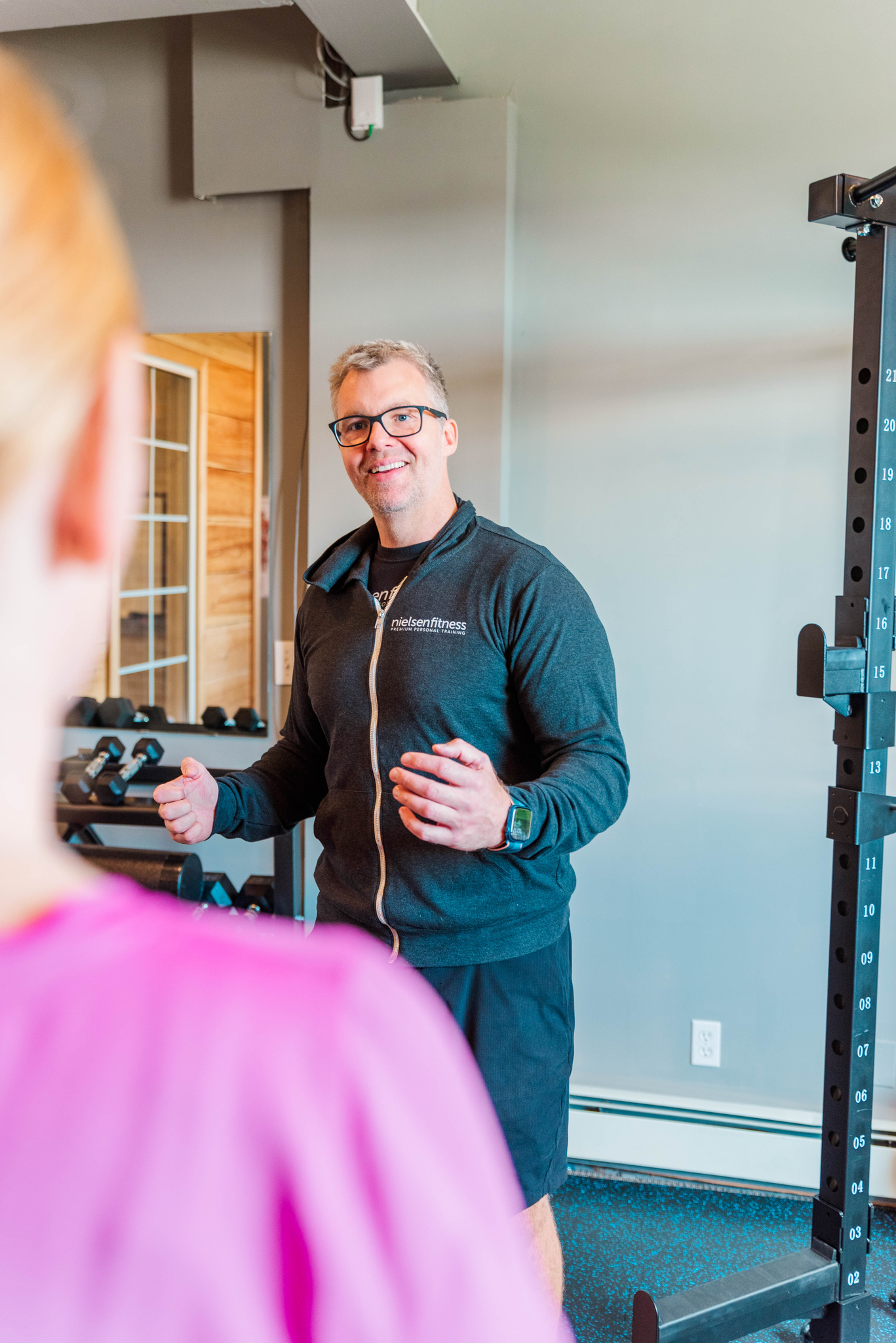
It’s easy to feel unsure about new movements, especially ones that involve rotation and balance. A Nielsen Fitness trainer will give you real-time feedback so you feel confident and safe. Our priority is to keep you focused and moving toward your goals.
FINAL WORDS
Adding multi-planar exercises to your routine can change the way you move, both in and out of workouts. And the best part? You don’t have to figure it out alone. Whether you’re interested in in-home personal training or want the flexibility of virtual personal training, working with our team is a great way to get started safely and effectively. Ready to take the next step? Reach out and let’s get moving — in every direction!