
Exercise Fitness Functional Strength
October 1st, 2025
Touching Your Toes: How Important Is It?
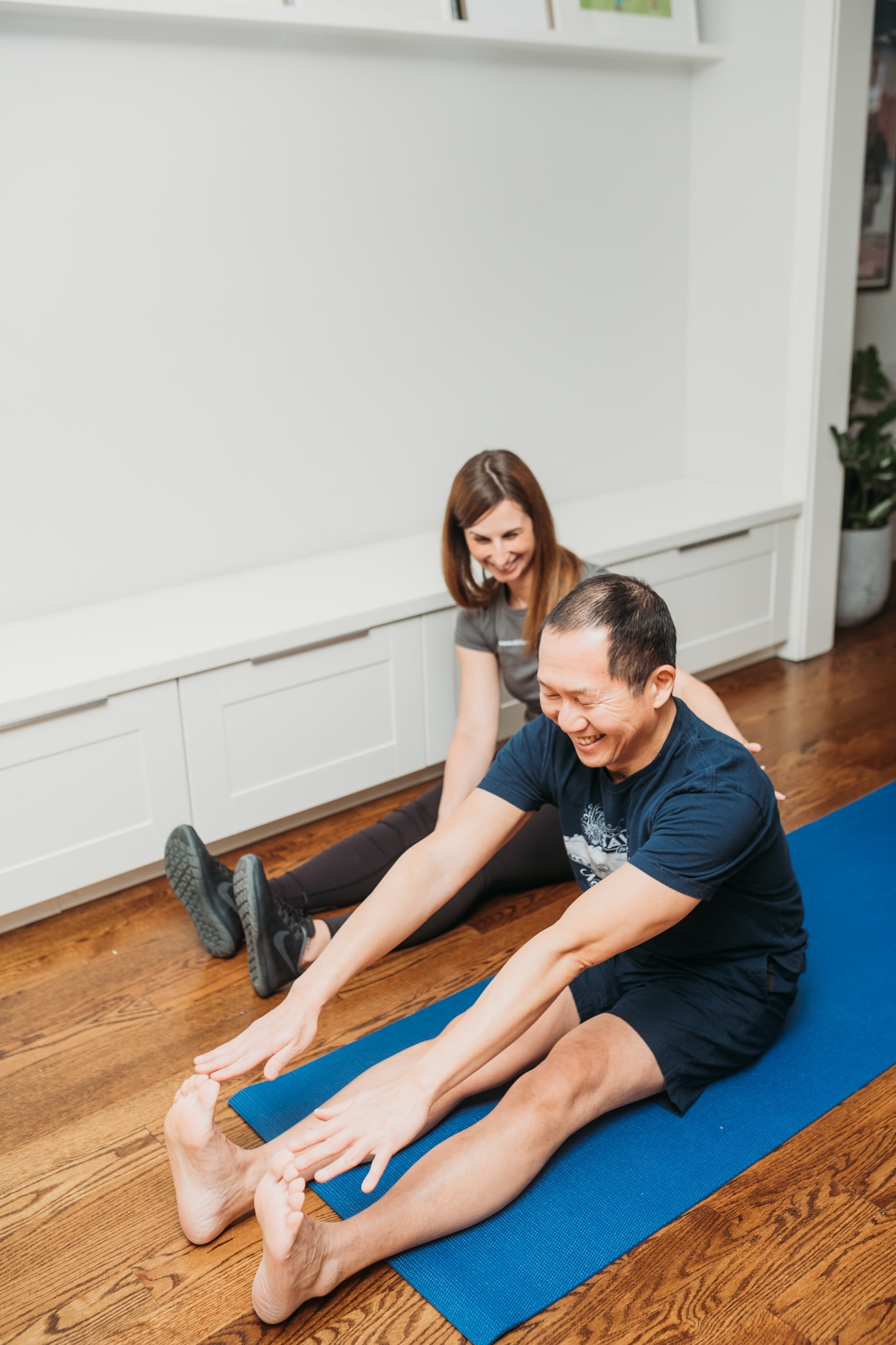
Reaching for your toes is often used as a key marker of flexibility. While providing a great stretch, it can also be a frustrating reminder of tight hamstrings or a stiff lower back. The truth is, touching your toes can tell us quite a lot about your mobility. Let’s break it down from a personal training perspective.
THE BASICS OF TOUCHING YOUR TOES
Being able to reach your toes from a standing position requires mobility in your hips, flexibility in your hamstrings, and freedom of movement in your spine. It’s often seen as a quick “check-in” for overall lower-body flexibility.
However, we like to remind our in-home and virtual personal training clients that this movement is less about passing or failing a test, and more about understanding how your body moves. If you can’t touch your toes, it doesn’t automatically mean something is wrong. What it does suggest is that your hamstrings, hips, or back might need some attention. Nielsen Fitness trainers use the toe-touch test as a conversation starter, not a measure of success.
THE MECHANICS OF TOUCHING YOUR TOES
When you bend forward to touch your toes, several muscle groups and joints are working together. Your hamstrings lengthen, your glutes and hip flexors assist, and your spine flexes forward. If you feel a sharp pull in the back of your legs, it’s usually your hamstrings holding you back. If your back feels tight, your lumbar spine might be limited in its mobility.
However, everyone’s body proportions are different. People with longer legs and shorter arms will naturally find it harder to reach their toes. That’s why we emphasize mobility first. “From doing daily errands to taking the trip of a lifetime, from going out with friends to staying in your own home, much of living happily and well depends on mobility” (Harvard Health, 2022). Being able to hinge at your hips smoothly and comfortably is far more important than whether your fingers graze the floor.
IS BEING ABLE TO TOUCH YOUR TOES NECESSARY?
The short answer is no, you don’t need to touch your toes to be fit and healthy. What’s more important is whether your body can move through daily life without pain, stiffness, or restriction. For example: you don’t need to reach your toes to pick something up off the ground, but you do need strong, mobile hips and hamstrings to protect your back during lifting movements.
That said, working toward improved flexibility can reduce your risk of injury, make movement more comfortable, and enhance your performance during sports and exercise. To summarize, while toe touching itself isn’t the goal, the flexibility it represents is worth pursuing.
OUR TIPS
If you want to improve your chances of touching your toes, “the best approach is to incorporate both dynamic (moving) and static (holding) stretches into your routine” (Well & Good, 2022). We guide our in-home personal training clients in Toronto, Collingwood, London, Hamilton, and Ottawa (and virtual personal training clients everywhere) through hip hinging drills, hamstring stretches, and dynamic mobility work that targets both flexibility and strength. Strengthening your core and improving your posture can also help, since your spine and pelvis need to work together for fluid movement.
FINAL WORDS
Touching your toes isn’t essential, but it can reveal valuable information about your body’s flexibility and mobility. If you can do it comfortably, great. If not, don’t stress — it doesn’t mean you’re unfit or unhealthy. Instead, see it as a cue to improve your movement quality, protect your back, and build strength where it counts. At Nielsen Fitness, we focus on practical movement goals that enhance your quality of life. Toe touching might be a nice milestone, but it’s the mobility, flexibility, and strength behind it that truly matters. Contact us today to learn more or request a free first workout.