
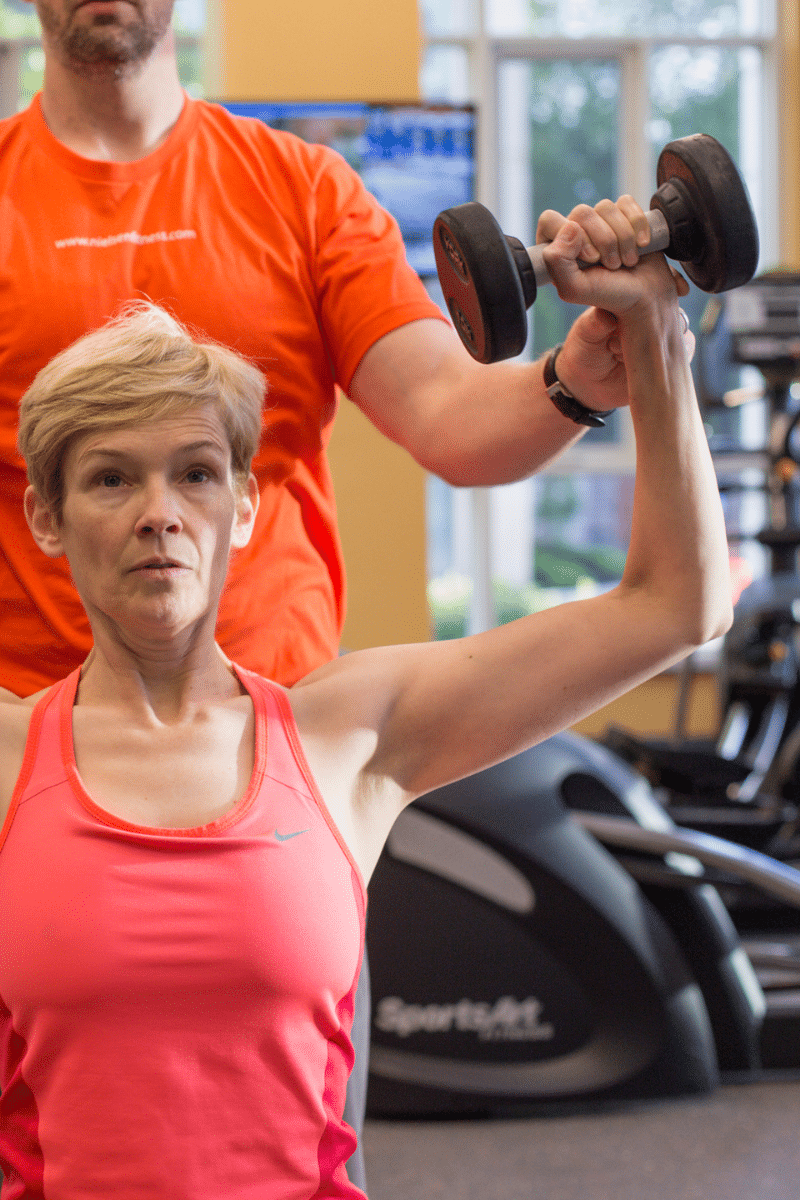
If you missed part 1, we covered the most common strength training mistakes around assessment, warm-up, and technique. This post picks up where that one left off. Once your form and warm-up are solid, the next question becomes how to keep progressing your strength week after week without breaking down. We recommend reading both posts together, since progression only works safely when it’s built on a foundation of good technique.
Virtual training has made high-quality strength coaching more accessible than ever, but it has also made one mistake more common: clients trying to progress by only doing more, heavier, faster. Real strength progression is more nuanced than that, and it’s something our in-home and virtual training coaches revisit with every client, every single session.
PROGRESSIVE OVERLOAD IS MORE THAN A HEAVIER BAR
Progressive overload is the training principle that the body only adapts, builds strength, and grows muscle when you gradually increase the demand you place on it. Most people hear the term and think it means one thing: add more weight. Sometimes that’s the right call. Often, it isn’t.
Trainers and strength coaches increasingly point out that load is just one lever among several. In fact, “weight is one of at least five variables you can manipulate” to keep a client progressing (ExerciseMenu.com, 2026). The others include tempo, pauses, range of motion, stability demands, and exercise complexity. A client who adds a two-second pause at the bottom of a squat, or slows the lowering phase of a push-up, is progressing just as meaningfully as one who added five pounds to the bar.
THE VARIABLES THAT MATTER BEYOND WEIGHT AND REPS
Tempo changes how long a muscle stays under tension. Slowing the lowering portion of a lift, or adding a brief pause at the most challenging point, makes the same weight feel noticeably harder without adding a single pound. Range of motion works the same way: a deeper squat, a fuller stretch at the bottom of a row, or a longer reach on a lunge all increase the demand on the muscle even when the load stays fixed.
Stability and complexity matter too. Moving from a supported machine exercise to a free-weight version, or from a bilateral squat to a single-leg step-up, asks the body to do more work just to control the movement, separate from how much weight is on the bar. Even rest periods are a variable. Shortening the recovery time between sets increases the overall training density and can be just as effective a progression tool as adding load, when it’s used deliberately rather than by accident.
PROGRESSION ISN’T THE SAME EVERY SESSION
Here’s what a lot of generic programs get wrong: they assume the right strength progression is fixed, decided weeks in advance and applied no matter what. In reality, the right adjustment on any given day depends on how your body actually shows up to that session. Sleep, stress, nutrition, hydration, and accumulated fatigue all affect how much your body can absorb on a given day.
This is exactly where in-home and virtual strength training has an advantage, because a coach watching your first few reps in real time can adjust tempo, range of motion, or rest on the spot based on how the movement actually looks and feels that day, not how it was supposed to look on paper.
This is also why self-monitoring matters so much. If your first working set feels noticeably harder than usual, that’s information, not a failure. It might mean today is a day to hold your current weight and focus on movement quality instead of chasing a new number. Good strength coaching, virtual or in person, reads those signals in real time instead of forcing a predetermined plan onto a body that isn’t ready for it that day.
WHY LOWER-BODY MOVEMENTS NEED MORE RECOVERY TIME
Not all muscle groups recover at the same rate, and lower-body training is the clearest example. Squats, deadlifts, lunges, and step-ups involve some of the largest muscle groups in the body, moving heavier absolute loads with a demanding lowering phase that creates more muscle damage than most upper-body pressing or pulling movements.
That’s a meaningful detail for anyone building their own strength program, especially for virtual training clients who don’t have a coach in the room to notice when soreness or fatigue is lingering longer than expected.
BUILDING REST INTO THE PLAN, NOT JUST INTO THE WEEK
Rest matters at every level of a strength program, not only between full workout days. Within a session, rest periods between sets of demanding lower-body movements need to be long enough to allow real recovery, particularly for heavier compound lifts like squats and deadlifts, where rushing the next set compromises both form and output.
Between strength sessions, the same muscle group generally needs real recovery time before it’s trained hard again. Guidance from exercise physiology organizations commonly points to “at least 48 hours of rest for each muscle group” (American College of Sports Medicine, via PFTA Schools, 2025), which is especially important after a demanding lower-body day. Training the same movement pattern again too soon, before tissue has repaired, is one of the most common ways plateaus and overuse injuries develop, in person or through virtual training.
READ PART ONE FOR THE FULL PICTURE
Progression, recovery, and rest only work when they’re built on solid technique and an honest starting assessment. If you haven’t already, read our companion post on the most common mistakes around assessment, warm-up, and technique. Together, both posts cover what actually separates steady, safe progress from spinning your wheels.
READY TO TRAIN SMARTER?
Whether you prefer in-home coaching or virtual training from wherever you are, Nielsen Fitness will help you find the right variables for your body on any given day. Book a free assessment and mini workout with Nielsen Fitness today and feel the difference a personalized plan makes.