
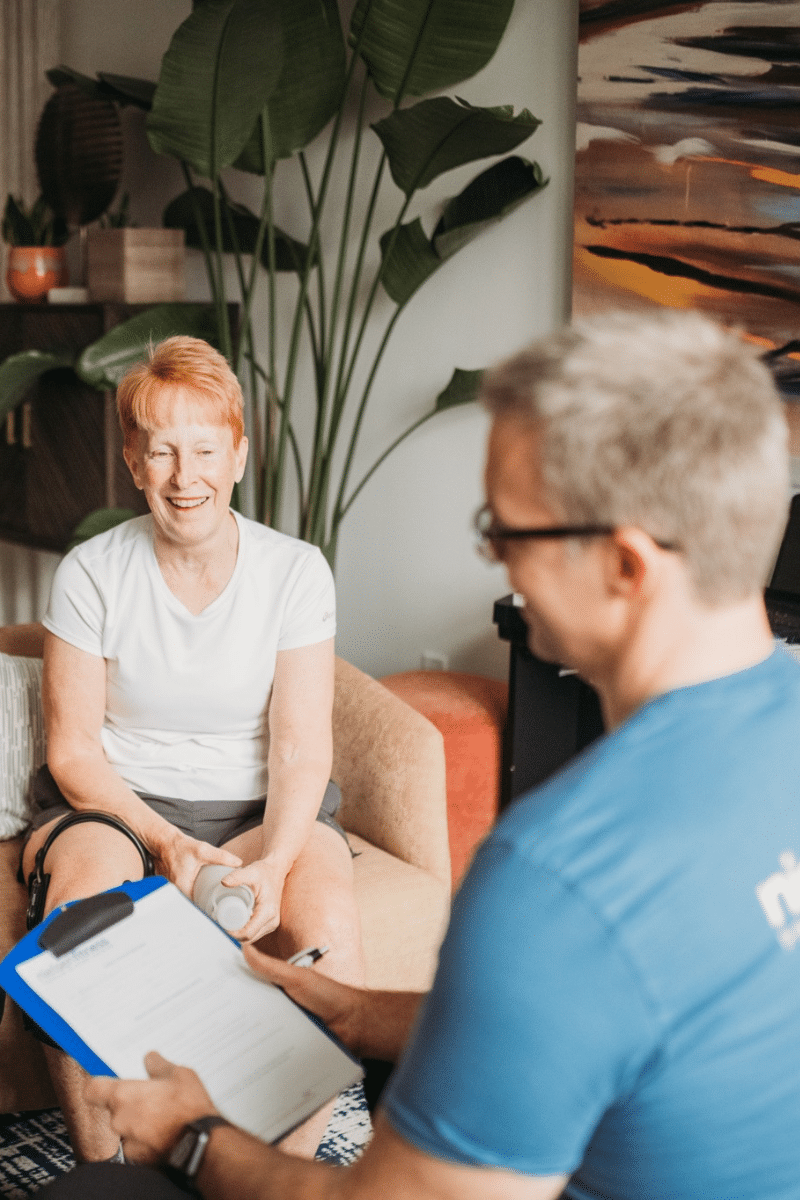
Older Adult Exercises Trainer Workout Structure
November 25th, 2026
Exercise Over 60: A Realistic Training Week for Active Adults
Most advice about exercise over 60 zooms in on single sessions, such as the perfect squat or the ideal walking pace. A week works differently. For exercise over 60, the arrangement of hard days, easy days, and rest days does more of the work than any one workout, because recovery slows with age and muscles need time to adapt. Research backs a strength-first structure. A 2025 meta-analysis concluded that resistance training should be treated as “a core component of long-term exercise programs for older adults” (Journal of Exercise Rehabilitation, 2025). The sample week below shows how exercise over 60 can fit into ordinary life. However, anyone with a heart condition, a joint replacement, or another health concern should check with a doctor first.
MONDAY: START THE WEEK WITH STRENGTH
Monday gets the longest strength session, when energy and motivation tend to run highest. A full-body workout of 40 to 50 minutes suits exercise over 60 well. It includes a squat or sit-to-stand variation, a hinge such as a hip bridge, a push, a pull, and a loaded carry. Two or three sets of eight to twelve repetitions, stopping with a couple of clean reps in reserve, provides enough stimulus without wrecking the next two days. Strength training anchors exercise over 60 because it protects the muscle that makes stairs, groceries, and getting up off the floor manageable. Hands matter here too, which is why our post on grip strength after 50 deserves a read.
TUESDAY: EASY WALKING FOR EXERCISE OVER 60
Tuesday calls for gentle movement. A 30 to 45-minute walk at a conversational pace sends blood flow to sore muscles and builds an aerobic base. It may feel too easy to count, yet this is exercise over 60 doing exactly what it should: supporting recovery while keeping the habit alive. A few hills or a stretch of uneven ground raise the challenge once the legs feel ready. Cold-weather walkers can pair this day with our winter footing home workout plan to build confidence on slippery surfaces.
WEDNESDAY: BALANCE AND MOBILITY
Midweek belongs to balance and joint mobility. Twenty to thirty minutes of single-leg stands, heel-to-toe walking, step-ups, and gentle hip and shoulder circles keeps the body ready for the unexpected stumble. The same 2025 meta-analysis found that resistance exercise improved fall-related performance, including lower-limb strength and balance, and raised confidence about avoiding falls. Balance is the piece of exercise over 60 that most people skip, and it pays off the moment a curb or an icy step shows up.
THURSDAY: THE SECOND STRENGTH SESSION
Thursday repeats the strength work with a different flavour. The movement patterns stay the same while the exercises change: a step-up in place of a squat, a row in place of a pull-down, plus a few fast, controlled sit-to-stands. Progression is the key idea. Guidelines cited in a 2026 meta-analysis of frail and pre-frail adults point toward “multicomponent physical activity interventions that include progressive resistance training” (PubMed Central, 2026). Adding a little load or one more repetition when every rep feels smooth is a sensible habit for healthier adults too. Anyone managing sore joints can modify the session using our guide to exercise for arthritis, because exercise over 60 should leave muscles tired, never joints angry.
FRIDAY: CHOOSE SOMETHING ENJOYABLE
Friday is for the activity that feels least like work: cycling, swimming, dancing, a brisk session in the garden, or a community class. Thirty to forty minutes at a moderate effort adds cardiovascular fitness without taxing the joints. The best form of exercise over 60 is the one that actually happens, so pick whatever pulls you out the door.
SATURDAY AND SUNDAY: ACTIVE REST AND TRUE REST
Saturday suits a longer outing at a relaxed pace, such as a park loop, a hike, or an errand run entirely on foot. Sunday is for rest, perhaps with light stretching. Rest is a training variable rather than a reward, and exercise over 60 depends on it, since strength is built during recovery rather than during the workout itself. Leaving at least one full day between strength sessions protects that adaptation, and the schedule above does exactly that.
NUTRITION, SLEEP AND SUPPLEMENTS FOR EXERCISE OVER 60
Food and sleep decide how much of the week’s effort turns into progress. Protein at every meal, plenty of fluids, and seven to nine hours of sleep give exercise over 60 the raw materials it needs. Supplements deserve a cautious view. A 2026 meta-analysis of 11 trials found that creatine added a small strength gain to resistance training in generally healthy adults over 60. Its authors describe resistance training as “one of the best-supported non-pharmacological strategies for improving muscle function in older adults” (Frontiers in Nutrition, 2026). The added benefit for muscle mass and physical function remained uncertain, so creatine is an optional extra, never a substitute for the training itself.
ADJUSTING THE WEEK WHEN LIFE GETS IN THE WAY
No week unfolds exactly as planned. Poor sleep, travel, or a cold can derail any schedule, and the sensible response is to shrink a session rather than skip it. Ten minutes of sit-to-stands and a short walk keep the habit intact. Our post on energy boosting workouts offers practical ways to scale a session down. Consistency across months matters far more than perfection in any single week, and a realistic plan for exercise over 60 expects interruptions. Training at home removes one more barrier, and our comparison of in-home personal training vs. the gym after 50 lays out the trade-offs.
BUILDING YOUR OWN EXERCISE OVER 60 ROUTINE
Begin with two strength days, two easy walks, and one mobility/balance session, then layer in Friday’s activity and the weekend outing as the routine settles. A gradual start is the safest way into exercise over 60, and the first month should feel almost too manageable. Keep a simple log of weights lifted and minutes walked. Watching those numbers creep upward shows that exercise over 60 delivers results. Review the plan monthly, nudge the loads upward, and keep what works.
START YOUR EXERCISE OVER 60 PLAN WITH SUPPORT
A written week is a strong start, and expert coaching makes it safer and more effective. Nielsen Fitness builds exercise over 60 programs around each person’s strength, health history, and goals, delivered at home, in the studio or online. Safe, effective exercise over 60 begins with a plan that fits your life. Contact Nielsen Fitness today to book your first session.