
Fitness Tips Our Method Success
May 27th, 2026
Our Top 5 Fitness Myths: The Truth About Results
The world is full of fitness myths and “expert” opinions. One day carbs are the enemy, the next day everyone’s drinking butter coffee and doing workouts before sunrise. With so much conflicting information online, it’s no wonder people feel confused about how to actually get healthy and stay consistent.
As a team of experienced in-home and virtual trainers, we hear the same misconceptions every week from clients across the globe. Many people delay starting their fitness journey because they believe they need more time, more equipment, or more experience before they can succeed. The truth is, sustainable fitness is much simpler than the internet makes it seem.
Whether you’re working with a virtual personal trainer, searching for in-home personal trainers near you, or trying to build a realistic home workout plan, separating fact from fiction is one of the best things you can do for your health. Let’s bust the Nielsen Fitness team’s top five health and fitness myths.
MYTH #1: YOU NEED TO SPEND HOURS WORKING OUT TO SEE RESULTS
One of the biggest misconceptions in fitness is that effective workouts need to be long, exhausting, and intense every single day. People often think if they’re not spending two hours in the gym dripping in sweat, the workout “doesn’t count.” That mindset causes many people to quit before they even begin.
The reality is that consistency matters far more than duration. A focused 30-minute workout done four times a week is usually more effective than one marathon session followed by six days of inactivity. As always, the best workout plan is the one you can realistically stick to long term.
We’ve seen clients transform their energy, strength, and confidence with surprisingly manageable schedules. Busy professionals, parents, students, and older adults often thrive with shorter workouts because they fit naturally into daily life.
A smart home workout plan focuses on quality over quantity. That means efficient movement patterns, progressive strength training, proper recovery, and realistic scheduling. You do not need to destroy your body to improve your health. In fact, overtraining often leads to burnout, soreness, injuries, and frustration. Sustainable fitness should leave you feeling stronger and more energized, not completely exhausted.
MYTH #2: CARDIO IS THE BEST WAY TO LOSE WEIGHT
Many people still believe endless cardio sessions are the fastest route to fat loss. Hours on the treadmill, long-distance running, or daily spin classes are often treated like the gold standard for weight loss. While cardio absolutely has benefits — it improves heart health, endurance, mood, and overall fitness — relying only on cardio for body transformation can backfire.
“A study done on marathon runners found that even after finishing extreme running events, athletes’ blood samples contain biomarkers associated with heart damage. These damage indicators usually go away by themselves, but when the heart endures extreme physical stress over and over, the temporary damage may lead to remodeling of the heart or physical changes such as thicker heart walls and scarring of the heart” (Cleveland Clinic, 2020).
In reality, strength training is one of the most effective tools for long-term fat loss because it helps build lean muscle mass. More muscle means your body burns more calories throughout the day, even while resting. Strength training also helps improve posture, bone density, metabolism, and daily functional movement.
That’s why most professional trainers (including every trainer on our team) combines both strength and cardio in a balanced approach. We often meet clients who have spent years doing cardio without seeing the results they want. Once they switch to a structured home workout plan that includes resistance training, everything changes. They feel stronger, more toned, and more confident while improving their overall health.
Another important factor is nutrition. No amount of cardio can outwork consistently poor eating habits. Fitness and nutrition work together, not separately. The good news is you don’t need a commercial gym full of machines to strength train effectively. Our in-home personal trainers in Toronto, Collingwood, London, Hamilton, and Ottawa (and virtual personal trainers everywhere) are helping clients achieve incredible results using creative programming right from their living rooms. Effective fitness is about strategy, not suffering.
MYTH #3: YOU NEED EXPENSIVE EQUIPMENT TO GET FIT AT HOME
Social media has convinced a lot of people that home fitness requires a perfectly designed gym with matching weights, fancy mirrors, and high-tech machines. It doesn’t. Some of the most effective workouts require little to no equipment at all.
A professionally designed home workout plan can improve strength, mobility, cardiovascular health, and flexibility using basic tools or just bodyweight exercises. Squats, push-ups, lunges, planks, glute bridges, and resistance band movements can create incredible results when programmed correctly.
During the past several years, we’ve worked with countless clients virtually and in person who achieved major progress without setting foot in a gym. Many were shocked to discover how effective home training could actually be.
One of the biggest advantages of working with a virtual personal trainer is flexibility. You can train in your condo, basement, office, backyard, or hotel room. Your workouts become easier to maintain because they fit your lifestyle instead of disrupting it.
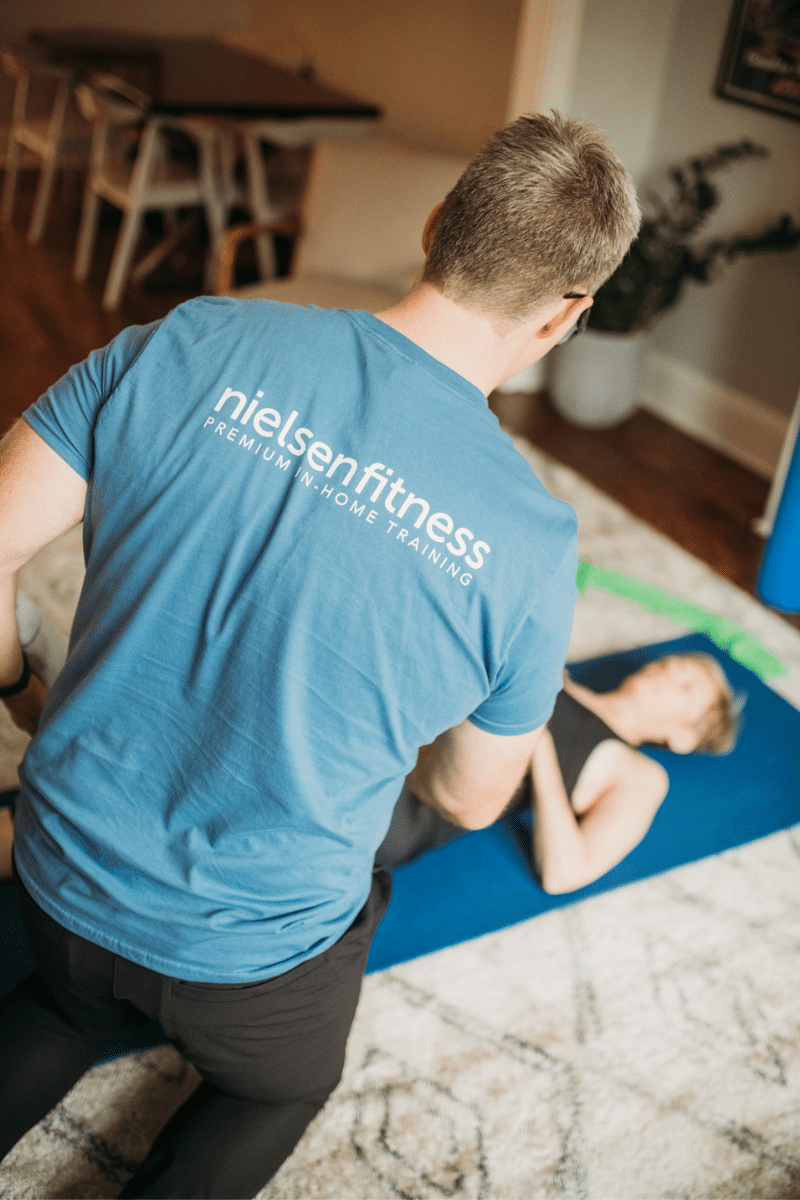
Similarly, in-home personal trainers bring expert guidance directly to your space. Clients save commuting time, avoid crowded gyms, and receive fully personalized coaching in a comfortable environment. Fitness should feel accessible, not intimidating.
MYTH #4: IF YOU’RE SORE, IT MEANS YOU HAD A GOOD WORKOUT
This myth has been around forever. Many people judge workout quality based entirely on soreness. If they can barely walk the next day, they assume the workout was successful. If they feel relatively normal, they think they didn’t work hard enough. In reality, soreness is not the best indicator of progress. Muscle soreness — especially after trying something new — is completely normal, but excessive soreness can actually interfere with recovery and consistency. If your body hurts so much that you skip your next workout, that’s not productive training.
Our team prioritizes movement quality, strength gains, improved endurance, mobility, energy levels, and long-term consistency. Those factors matter far more than whether you’re sore for three days afterward. This is especially important for beginners. Too many people start fitness with extremely intense workouts that leave them discouraged and uncomfortable. They associate exercise with pain instead of progress.
A properly structured home workout plan should challenge you while still allowing your body to recover and adapt safely. We carefully monitor workout intensity and progression based on experience level, goals, injuries, and schedule.
MYTH #5: GETTING HEALTHY MEANS GIVING UP YOUR FAVOURITE FOODS
This may be the most damaging myth of all. People often assume healthy living requires extreme restriction. No pizza. No desserts. No pasta. No social events. It’s an all-or-nothing mentality and it’s no fun. “All-or-nothing thinking can also be very unrealistic, which can contribute to excessively high standards that are impossible to meet. As a result, people often avoid pursing goals because they don’t think the results will match their expectations” (Very Well Mind, 2026).
As trainers, we encourage clients to build realistic habits they can maintain for years. That includes enjoying favourite foods in moderation while focusing on overall nutrition quality. You do not need to “earn” food through exercise. You do not need to eliminate entire food groups unless medically necessary. And you definitely do not need to follow every trendy diet you see online.
Healthy eating should support your energy, workouts, sleep, and lifestyle. It should feel manageable and enjoyable. Many people are surprised to learn that small consistent changes often produce the biggest long-term results. Drinking more water, eating more protein, improving portion awareness, and planning balanced meals can make a massive difference over time.
The same philosophy applies to fitness itself. A realistic home workout plan that fits your life will always outperform an extreme routine you can’t maintain. That’s why personalized coaching matters. Whether someone works with a virtual personal trainer or one of our in-home personal trainers, the focus is always on building sustainable habits that support real life.
THE TRUTH
The health and fitness industry often profits from confusion. Extreme programs, quick fixes, detoxes, and unrealistic transformations attract attention because they sound exciting. Real fitness is much less dramatic. Results come from consistency, smart programming, balanced nutrition, recovery, and accountability. They come from building habits you can actually maintain while still enjoying your life.
READY TO START YOUR FITNESS JOURNEY?
If you’re tired of confusing fitness advice and ready for a smarter, more sustainable approach, we’re here to help. Our team of expert in-home and virtual personal trainers creates customized programs designed around your lifestyle, fitness level, and goals. Whether you want to build strength, lose weight, improve mobility, increase energy, or simply feel better in your body, we’ll help you create a workout plan that works for real life. Book your free first workout today and discover how effective, supportive, and enjoyable personal training can be. Your healthiest, strongest self can start now.